Top 6 areas of improvement for employees to enhance performance
Discover the top 6 areas of improvement for employees to boost performance, from goal setting to critical thinking. Build a better framework for reviews today.

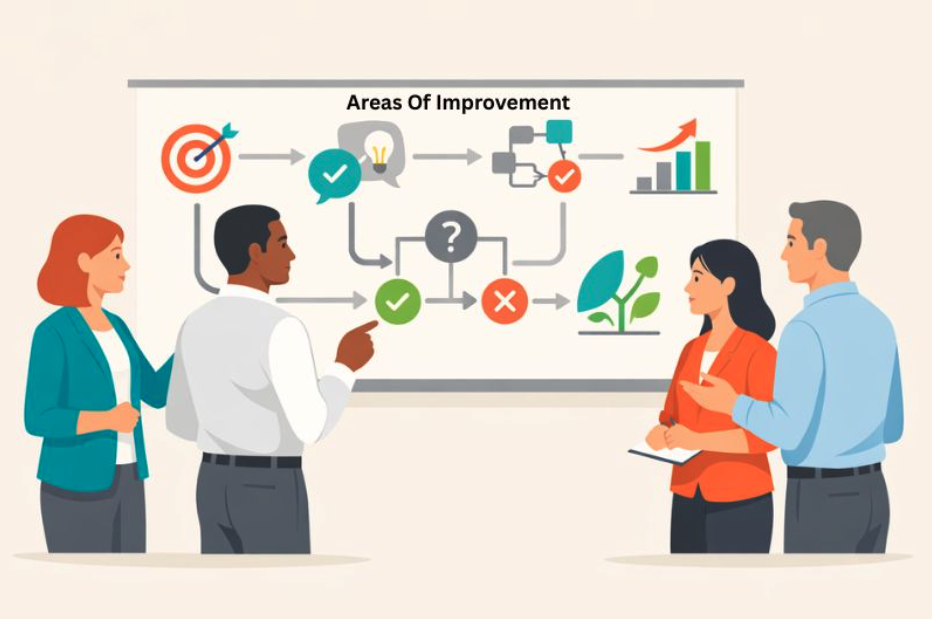
When discussing employee performance improvement, the conversation often gravitates towards familiar topics like time management, conflict resolution, communication skills, and customer service. While these hold an important place in professional development, experience and research show they are not always the main drivers of performance.
What most strongly influences people is how they think, respond to challenges, take ownership of their work, and navigate the workplace. In today’s discussion, we’ll focus on these lesser-discussed performance factors. The objective is to provide a framework for meaningful performance reviews and performance improvement discussions.
Quick Overview
The top areas of improvement for employees are goal setting, accepting and acting on feedback, stress management, and critical thinking and decision-making. These areas sidestep skills like leadership, technical, and conflict-resolution skills, and instead delve into what strongly influences performance.
Table of Contents
- Goal setting
- Accepting and acting on feedback
- Stress management
- Critical thinking
- Decision making
- Proactiveness
- Conclusion
- FAQs: Areas of improvement for employees
Goal setting
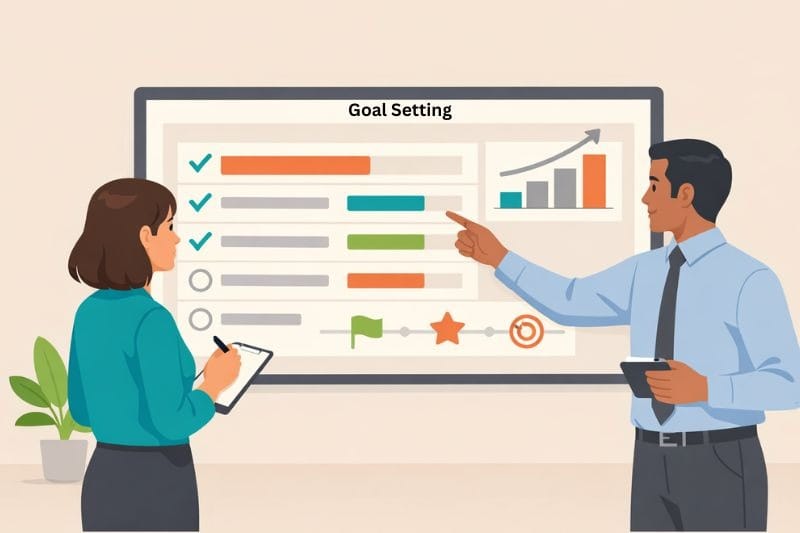
Goal setting is not rocket science for most small and medium-sized companies, but often it feels like translating goals into everyday activities can be. For real insight into actionable steps, employees need to understand:
- Why the goal is important.
- How it will be measured.
- What actions translate into the outputs you’re looking for.
- How to monitor progress.
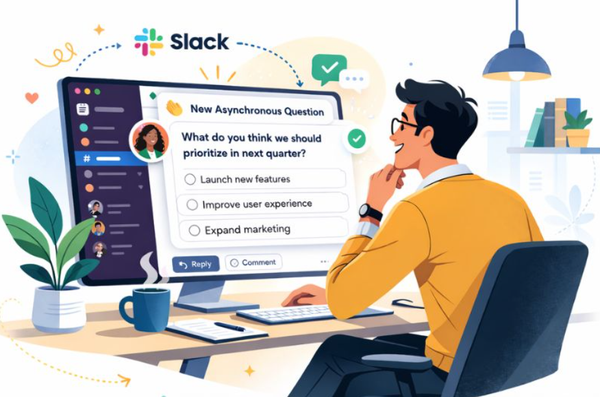
Improve goal setting now: Bring goal setting into communication platforms (like Slack) with OKR templates, and Slack integrations like Click-up, and Stany Standup. These apps allow you to set daily, weekly or monthly goals, and instantly sync to calendars. Stany Standup allows you to automate check-ins for easy goal progress feedback.
Why take this approach? What gets measured gets done. Goal-setting tools take away the mental strain of tracking and updating goals. They also make goals visible for everyone.
Accepting and acting on feedback
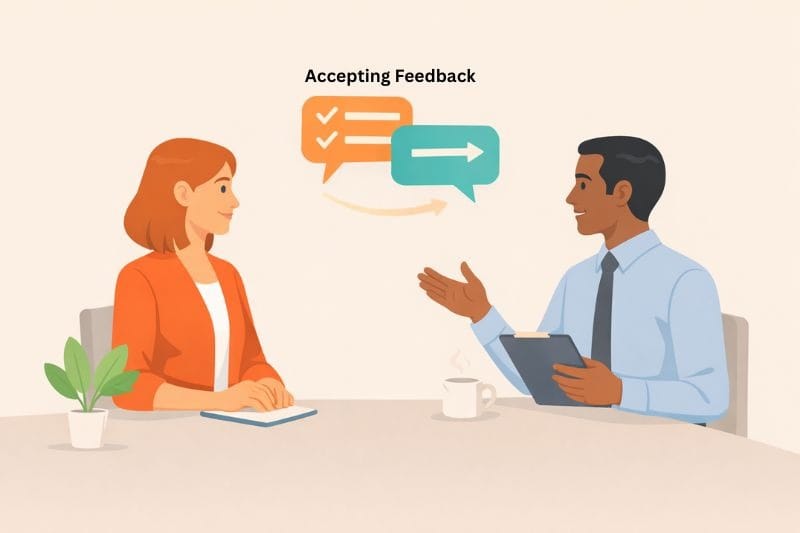
Personal and professional growth hinges on accepting and acting on feedback. It often requires active listening skills and self-awareness to see beyond the "critique’ of an employee’s work. According to Harvard Business School Associate Professor Ashley V. Whillans, a more effective approach for everyone is for employees to ask for advice rather than feedback. Their research findings indicate that this prompts future-focused answers, rather than a critique of past actions.
Advice asking requires less confrontational interpersonal skills on both sides, helping to accept constructive feedback without feeling attacked or on the defensive.
Improve how feedback is given: Multi-rater feedback works well to keep conversations focused on advice rather than past actions. Managers who receive input through 360-degree performance reviews see the bigger picture and can tailor their advice to the individual. With performance review software, managers and employees benefit from AI-driven insights that help drill down to actionable advice.
Stress management
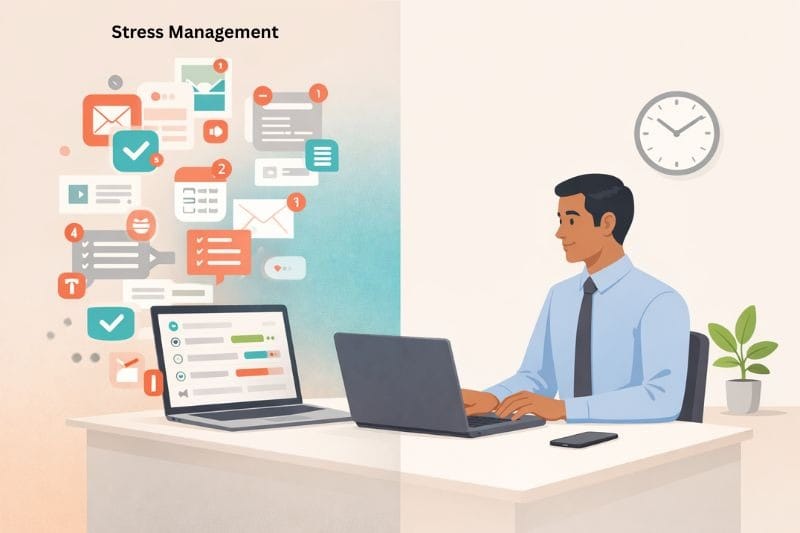
Our digitally-driven society is bringing with it a host of new stresses to personal and professional life. With research showing that 86% of American adults report they feel the pressure to check emails, messages, and chats constantly, stress management in the workplace takes the form of managing digital anxiety.
Always-on digital environments may help us get things done faster, but the human brain hasn’t kept pace with the new working world. Based on recent findings, such environments can reduce productivity if not carefully managed. Improving the situation calls for regular breaks, time-slots for focused work, encouraging employees to lock away phones and tablets for an hour a day, and asynchronous check-ins.
Critical thinking
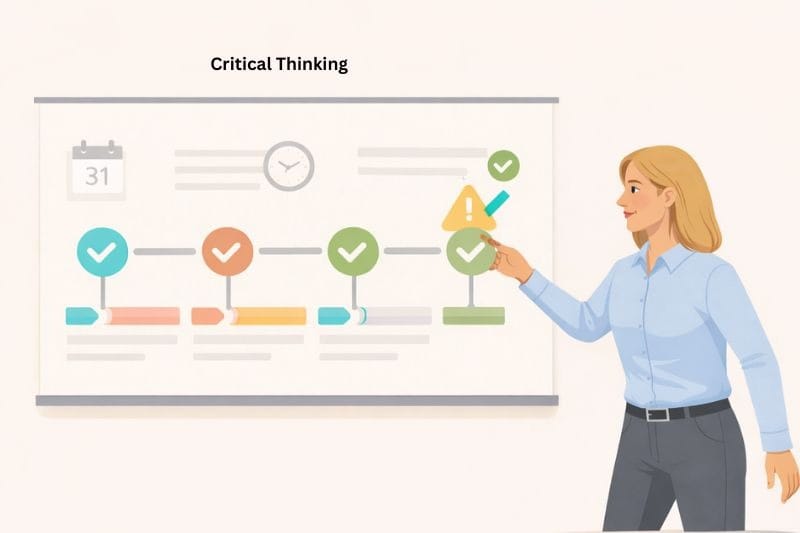
Critical thinking is defined as the objective analysis and evaluation of information in order to form a reasoned judgment. Critical thinkers have been shown to outperform their counterparts, show higher emotional intelligence, and practice active listening. In the World Economic Forum report, ‘The Future of Jobs’, it is listed as one of the core professional skills for industries.
Critical thinkers enhance performance in the following ways:
- They excel at finding credible sources, data analysis, distinguishing facts from bias, and recognizing patterns in information.
- By evaluating evidence, they increase their decision-making skills and are more likely to stick with the decisions they make because they are based on facts.
- Critical thinking fosters problem-solving skills and continuous learning, which gives the critical thinker big-picture thinking.
- They question assumptions, recognizing personal biases and are therefore better at getting to the root of a problem.
Managers can help employees develop critical thinking skills with questions like what, why, when, who, and why. They can also encourage learning beyond daily tasks, so that employees get a different perspective on the industry or their job function.
Managers who run meaningful performance reviews based on future-focused advice see better results. In ‘How to prepare a performance review as a manager’, we give you expert advice on how to set up performance reviews.
Decision making
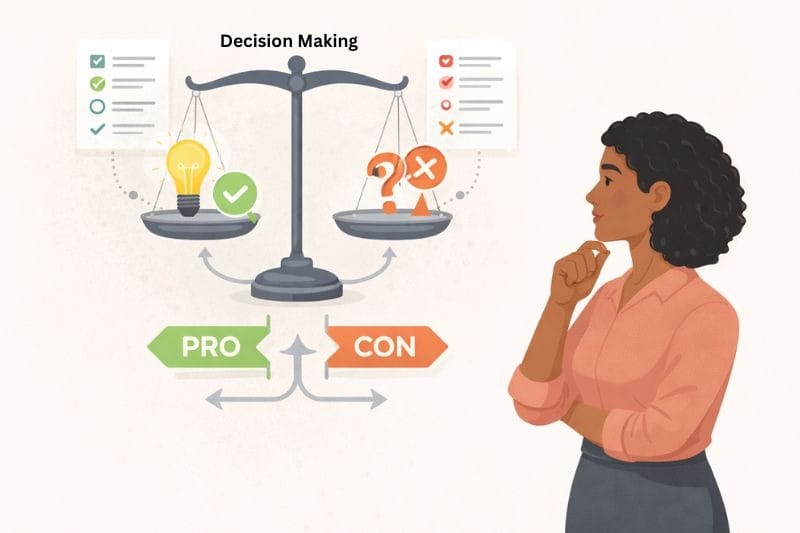
Linked closely with critical thinking, decision-making is a critical employee development skill. It is the purposeful selection of a course of action, based on multiple options, which leads to a desired outcome.
Good decision makers are systematic, identify areas of improvement, foresee potential outcomes, and learn from their mistakes. You will often find decision-making as part of leadership development initiatives because it carries so much weight in organizations.
One research paper focused on a new generation of leaders emerging from the gaming generation and showed how games have helped to develop innovative thinking, comfort with constant change, and emotional engagement. This type of research is renewing interest in game-based training activities in the workplace for developing decision-making skills.
Managers who want to combine work-play initiatives can try:
- Collaborative challenges like escape rooms.
- Survival scenarios (like Stranded on a Mountain)
- Building tasks (like egg drop or the marshmallow challenge)
- Strategy games (like chess or Stratego)
Proactiveness
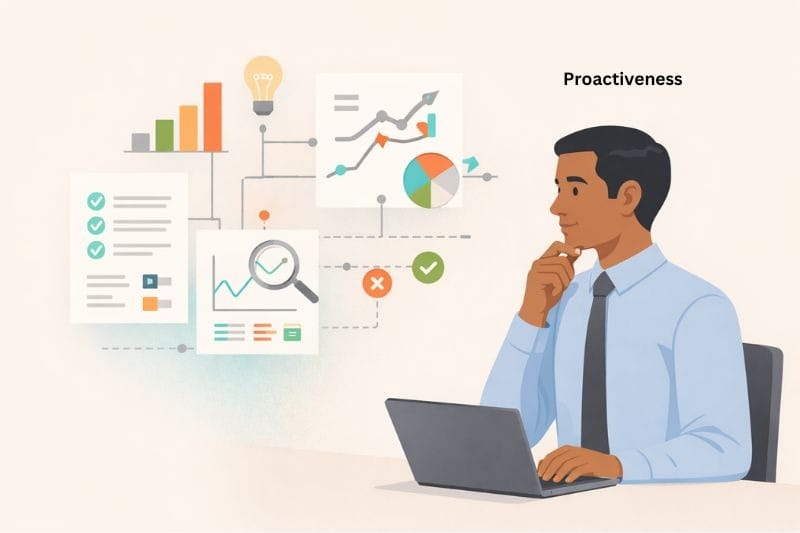
A proactive person takes initiative because they think ahead and anticipate challenges that could arise. They do not passively wait to be told what to do and when to do it. It is the opposite of reactiveness, where problems are responded to only after they occur. Proactiveness is linked to other productivity-enhancing attributes such as agency, continuous improvement, integrity, and high levels of accountability.
One research article has stated that one of the keys to survival in our technological era is proactive work behavior. The following drivers are signs of proactiveness, which can be encouraged by managers:
- Taking the initiative to ask for feedback and constructive criticism.
- Internal motivations for job satisfaction that drive independent work, planning ahead, and strong problem-solving skills.
- A growth mindset, which overcomes internal barriers naturally because it values learning and progress.
- A need for self-improvement through training sessions. Proactive individuals are concerned with career development and continuous learning.
Putting areas of improvement in context
The current technological advancements are rapidly changing what we understand about the nature of work. In the years ahead, performance enhancement will be driven through critical thinking, proactive behaviors, strong decision-making, and other areas of improvement mentioned in this discussion.
Other areas of improvement, such as communication, time management, listening skills, and technical skills, still play a role in helping employees meet objectives. However, managers can expect these skills to become less important as artificial intelligence is more widely used to support employee outputs. For example, gaps in time management skills will be filled by AI scheduling tools. Gaps in communication by using AI tools to structure written (and even verbal) communication.
If your current needs are still leaning towards these areas of improvement, ‘Top 15 areas of improvement at work for ‘go-getting’ employees’ will help you give constructive performance review feedback, while our current discussion will give you the ability to plan for future needs with your employees.
Work improvement discussions should form part of an effective performance review cycle. By adding review software to that cycle, you can give more regular, clearer, and meaningful insights to your employees. It's more than just a data collection tool; it’s an instrument for getting to the root causes of challenges.
Start now with Simpleperf by BuddiesHR, where you can set up reviews in minutes and begin receiving solid data and helpful insights.
FAQs: Areas of improvement for employees
1. What are the top 3 areas of improvement employees need to focus on?
The top three employee improvement areas are written communication, good time management skills, and problem-solving skills. These are often referred to by employees during review meetings when completing personal development goals. These skills are categorized as basic-level skills that all employees should have in order to meet their performance goals.
2. What are 5 areas of improvement in the workplace?
Five common areas of workplace improvement are verbal communication, organizational skills, presentation skills, and strong problem-solving skills. Many jobs globally list these skills on vacancy ads, job descriptions, and as desirable competencies for employees. These areas of improvement relate to soft skills and form part of training programs across a wide range of industries.
3. How to answer 3 ways to improve work performance?
Answering this question will focus on actionable steps you will take to improve the current level of performance. The steps should support measurable targets, have clear timelines, and be broken down into daily activities if required. A broad level overview would show self-awareness, accountability, insight into current challenges, and ways to increase productivity.
Sources