Philippines leave laws and holidays for 2026
Updated Philippines leave laws and holidays - 2026. Explanations of leave types for employers. Plus, learn how to manage leave admin with a vacation tracker.

Are you still manually calculating holiday premiums and service incentive leave for your team? With 2026 in full swing, staying compliant with the Department of Labour and Employment (DOLE) is a year-round priority for businesses in the Philippines.
In this up-to-date guide, we take a look at holidays in the Philippines, as well as how specific leave laws affect payroll computations, and help you manage the administrative burden by introducing the use of a vacation tracker.
Quick Overview
In 2026, the Philippines will observe ten regular holidays as well as several special non-working days as mandated by Proclamation 1006. Key dates include New Years Day (Jan 1), Maundy Thursday (Apr 2), and Independence Day (Jun 12). Statutory requirements set by the Department of Labor and Employment require proper pay computation for these days.
Table of Contents
- Holidays in the Philippines 2026: Snapshot
- Paid annual leave in the Philippines
- Regular and special non-working days
- Maternity leave
- Paid paternity leave
- Sick leave
- Leaves for victims of violence against women and children
- Special leave for women
- Conclusion
- FAQs: Philippians leave laws and holidays
Holidays in the Philippines 2026: Snapshot
Paid annual leave in the Philippines
Employers in the Philippines are required to provide service incentive leave (SIL) as mandated by Article 95 of the Workers’ Statutory Money Benefits (2024). This refers to paid leave of five days to an employee who has worked at least one year of service. This can be used for sick leave, vacation leave, and other leave purposes.
Compared to other countries in Southeast Asia and Europe, this is relatively low.
However, the country offers a generous amount of regular and special holidays (+18), and local employers offer competitive leave packages to attract top talent.
Regular and Special non-working days
The Philippines offers ten public holidays and several other non-working holidays. Employees get paid for these holidays according to the government’s holiday pay regulations. The following table summarizes the holiday pay computations for 2026.
Holiday pay rate: Yearly service incentive leave
Whether employees are entitled to pay for these holidays (as per the schedule above), depends on certain stipulations:
- An employee is entitled to holiday pay if they were on paid leave of absence the day preceding the holiday.
- An employee is not entitled to holiday pay if they were on unpaid leave on the day preceding the holiday.
- An employee is entitled to holiday pay if they are on approved leave (such as maternity leave), at the same percentage as that paid by the relevant authority (employee compensation or social security system).
- An employee is entitled to holiday pay if it is a non-working day or rest day that precedes the holiday.
Managing these and other pay stipulations (as documented in the Workers Statutory-Monetary Benefits Handbook 2024 Edition) requires companies in the Philippines to keep meticulous leave and pay records. You can mitigate the administrative burden by using a vacation tracker. A vacation tracker will help you customize statutory leave rules once-off, after which the system will take care of tracking the type of leave an employee takes. Leave reports will then help you to accurately manage your payroll computations.
Maternity leave
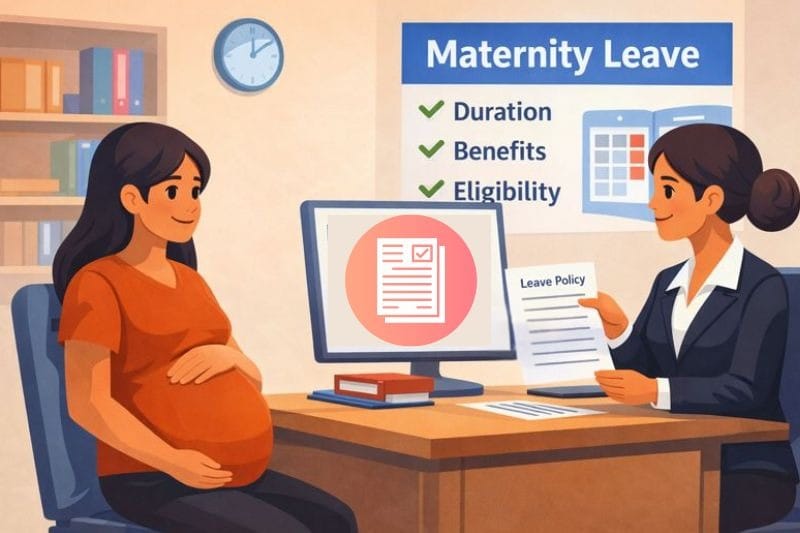
In the Philippines, maternity leave is granted to a female employee for every instance of pregnancy, miscarriage, or emergency termination of pregnancy. Paid maternity leave benefits are:
- 105 days fully paid maternity leave, and a further 15 days in the case of a female employee qualifying as a solo parent, according to the Expanded Maternity Leave Law, Republic Act 8972, and amended Act 11861.
- An additional 30 days in cases of live childbirth (a child is alive when born), provided that the employer is given due notice.
- In the case of a miscarriage or emergency termination, no less than 60 days on full pay can be taken.
- Workers may allocate seven days of said benefits to the child’s father. This is over and above the parental leave granted by the Paternity Leave Act of 1996.
- Eligible workers must have made at least three monthly contributions to social security system (SSS) in the 12 months leading up to the maternity leave.
Paid paternity leave
Paternity leave refers to leave applicable to a married male employee, for the reason of supporting his lawful wife during her recovery from childbirth (including miscarriage and emergency termination). The male employee may take seven days on full pay after the delivery of the child.
To qualify, the employee must be cohabiting with his wife at the time of delivery, and given reasonable notice to his employer. The labor code allows paternity leave for the first four deliveries by an employee’s legitimate spouse. A male employee may take this leave regardless of employment status.
Sick Leave
The government does not mandate paid sick leave for employees in the Philippines. Instead, all employees are granted service incentive leave of 5 days, which can be taken for sick leave. However, the public and private sectors can grant employees sick leave as part of their employment agreement.
Employees may claim a daily cash allowance from the social security system if they have been sick and regularly pay contributions to the SSS. This can help to offset the impact of unpaid sick leave. This is documented in RA1161 and amended RA11199 - Social Security Benefits.
Free HR tool for employers: PTO Accrual Calculator
Leave for victims of violence against women and children (VAWC)
In the Philippines, a concession is made for victims of domestic or other violence by granting paid leave to female employees. This leave is for women to attend to the medical and legal concerns related to violence committed against them and/or their children.
In addition to paid leave under existing labor laws, company policies, and/or collective bargaining agreements, the victim-employee is entitled to 10 days of fully paid leave, which may be used when necessary.
Parental leave for solo parents
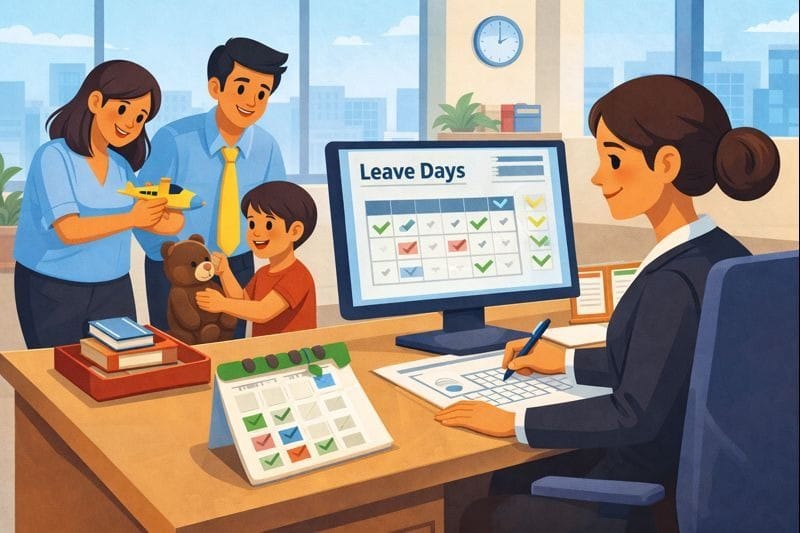
Solo parent leave is afforded to workers who are the sole caregivers. The Solo Parents Welfare Act of the Philippines provides this leave for employees to carry out their parental duties and responsibilities, where the physical presence of a caregiver is needed. The child must be unmarried, unemployed, and 22 years of age or below for this benefit to apply.
Employees can avail of not more than 7 days of paid leave per year, regardless of employment status. However, the employee must have worked at least six months for the company.
Special leave for women
Special leave is given to women who have had surgery for gynecological disorders, allowing them to recuperate. This leave can be up to two months (full pay) and is provided for women of all ages, with the following qualifications:
- The female employee has rendered continuous aggregate employment for at least six months during the 12 months preceding the surgery.
- The employee has filed a reasonable notice with her employer of special leave.
- She has undergone surgery for a gynaecological disorder as certified by a licensed physician.
With multiple statutory leave types to monitor, having a reliable way to track leave types and usage can significantly reduce the administrative burden and compliance risk. Vacation (PTO) tracking software approaches this from two angles: Ensuring leave records remain accurate with customized leave rules, and automating the leave request and approval process. Explore the BuddiesHR leave tracker - Palmy Vacation.
Conclusion
Workers in the Philippines have access to several types of leave benefits. This includes annual leave entitlement (service incentive leave), maternity and paternity leave, solo parent leave, and also special types of leave, like those given to women-victims of violence, and women needing gynaecological surgery. Beyond these provisions, Filipinos may take government-instituted, regular holidays and special holidays (working and non-working) that total +18 days a year.
FAQs: Philippines leave laws and holidays
1. How should I calculate pay for successive regular holidays in 2026?
In April 2026, Maundy Thursday (2nd) and Good Friday (3rd) are successive regular holidays.. If an employee works (or is on paid leave) on the Wednesday preceding Maundy Thursday, then they will receive basic wage x100% for both days.
If the employee takes unpaid leave on the Wednesday preceding Maundy Thursday, they are not entitled to be paid for either public holiday, unless they work on Maundy Thursday. If they work on Maundy Thursday, they will be paid basic wage x 200%, and be entitled to basic wage x100% for Good Friday.
2. What are the tentative dates for Eid’l Fitr and Eid’l Adha in 2026?
The exact dates of the two holidays are confirmed by Presidential Proclamation closer to the time, Eid’l Fitr is expected to be around March 20, 2026, and Eid’l Adha on May 27, 2026. Once proclaimed, both these days will be treated as regular holidays. Employees who are not at work on these days are entitled to basic wages x 100%, provided they were present, or on paid leave, on the workday preceding the holiday. Employees who work on these days will receive basic wage x 200%.
References: