Asynchronous Feedback for Remote Teams: How to Improve Clarity and Collaboration
Learn about asynchronous feedback for remote teams. Discover how it improves clarity and collaboration, psychological safety, and allows for deeper thought.

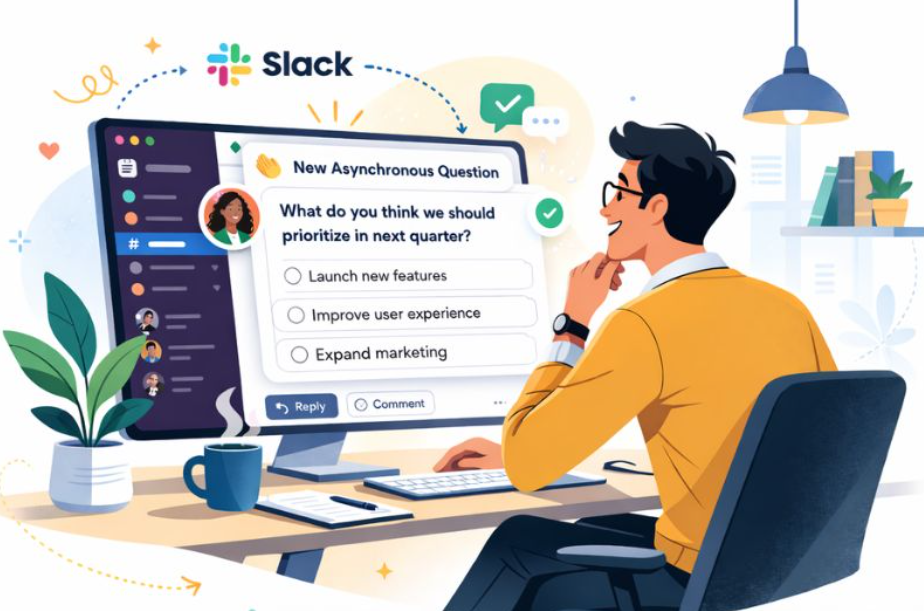
Most companies invest heavily in their feedback culture. They encourage openness, ask for feedback regularly, and say everyone’s opinions matter. But in reality, feedback isn’t organic and forward thinking. Rather, it’s reactive and shaped by recent events, or immediate pressures. It’s also ceremonial. We come with ‘something to say’ during meetings and hope that it satisfies the person who asked for it.
However, cognitive and behavioral research has shown that this isn’t the best way for people to give feedback, or learn from interactions. Quality feedback is a much slower process, and renders more intelligent insights. It’s the kind of feedback we all want. But how do we get it? The answer: The asynchronous feedback process.
Quick Overview
Asynchronous feedback is a method used by businesses to request and give feedback on tasks, projects, deadlines, or daily activities. The main objective of this type of feedback is to give a person time to reflect and give a more meaningful response than they could under immediate pressure.
Table of Contents
- What is asynchronous feedback?
- Why asynchronous feedback is better for quality communication
- Scenarios where asynchronous feedback is the better approach
- Why asynchronous feedback is ideal for remote teams
- Conclusion
- FAQs: Asynchronous feedback
What is asynchronous feedback?
Asynchronous design feedback is a slower and more thoughtful way of getting valuable feedback in the workplace. It doesn’t require an immediate response, and doesn’t require you to come up with brilliant ideas ‘on the fly’.
Common asynchronous tools for facilitating this feedback include Slack (Stany Standup), MS Teams, Loom, Google Docs, and Jira. They are particularly helpful for remote teams where real-time conversations are not always possible, and scheduling conflicts (such as time zone differences) can inhibit exchanging thoughts.
Why asynchronous feedback is better for quality communication
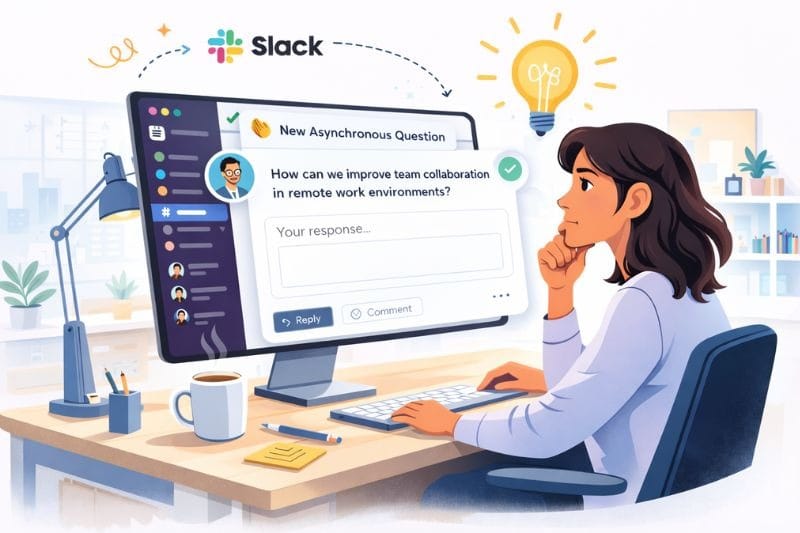
Adding asynchronous feedback to your communication process aligns better with behavioral research about how people learn and come up with better ideas. Originally designed for educators, Bloom’s taxonomy puts forward the idea that people need basic knowledge and understanding of a topic, and then an opportunity to see it in practice, before they can get to higher-order thinking.
Higher-order thinking includes problem-solving, creativity, and critical thinking. Businesses need these skills to thrive, but rarely have the opportunity to encourage them. Rather, instant design feedback (the kind that is immediate and urgent) is favored.
Daniel Kahneman, in his book, ‘Thinking, Fast & Slow’ expanded on similar ideas by dividing human cognition into two systems.
- System 1: Fast thinking (Quick, operates automatically, intuition, pressure-based).
- System 2: Slow thinking (Effortful mental activities, concentration, analysis, innovation).
System 2 is called the ‘lazy controller’. It allows system 1’s intuitive, and often inaccurate, impressions to dictate actions. If you’re in a meeting where a quick response is required, instant design feedback follows because ‘system 2’ prioritizes it. This does not mean the feedback is correct, or even valuable. But these are the downsides of ‘always on’ culture in modern workplaces.
Async feedback changes the whole feedback dynamic, taking the focus from immediate feedback to feedback quality instead. By doing that, it becomes the vehicle for tremendously beneficial conversations.
Scenarios where asynchronous feedback is the better approach
As Kahneman put forward, there is a time and place for both systems of feedback. This requires you to be acutely aware of what you want to achieve when you’re asking for contributions. Sometimes you need a quick answer, yes or no. Other times, you have very specific questions you want answered with more detail. The trick is to know which one applies.
1. You want to keep feedback momentum
Feedback momentum describes the process of gathering information, developing action plans, and then asking for more feedback. It is the ‘oomph’ in communication where positive results encourage more feedback, and even better results.
The approach that promotes feedback momentum? You guessed it. Asynchronous communication.
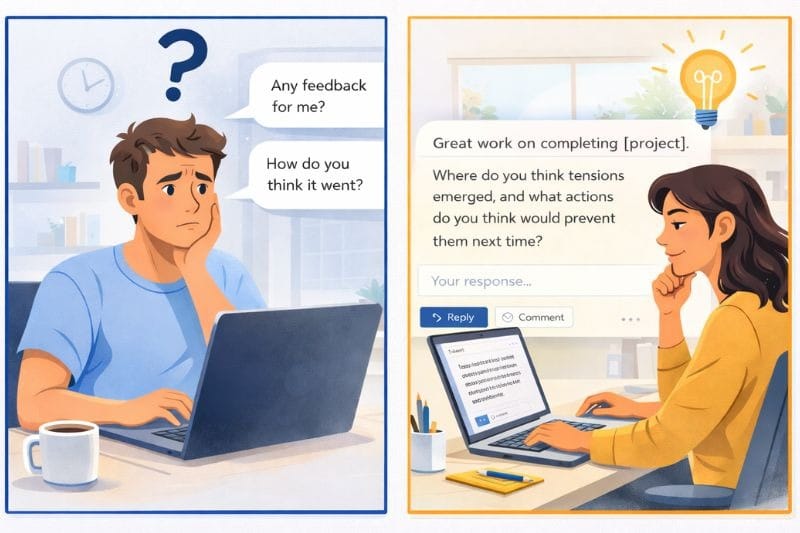
When team members are asked for real time feedback such as:
- How did the project go?
- Any feedback for me?
- Can we improve this?
It becomes just another task they have to do to please the feedback seeker. The fact that the timing for it is off, or an unnecessary pressure has been created, doesn’t help to provide the kind of feedback that is required.
When you create space and time with async feedback, you are able to ask for specifics and give clear instructions. Would this be a better approach? Probably. Here’s an example.
‘Great work on completing [name of project]. I’m collecting design feedback now so that we can decide on the next actions to take. We’ve had some teething problems. I’m curious if you feel we could avoid tensions altogether, and if you’d be able to provide examples of how we could do this.’
By providing the space for the person to respond you eliminate unthoughtful design feedback.
One way to benefit from both real-time feedback and specific feedback is through tools like Pulsy Survey (real-time polls) and Stany Standup (async feedback). These tools integrate with Slack and provide the way for you to get the right type of feedback at the right time. Add Stany or Pulsy to Slack now.
2. You want to create psychological safety and encourage deep thinking

Sometimes you have serious problems you need to solve in the workplace and you know that it’s going to require honesty, trust, and openness. This can be when a project has gone horribly wrong, there’s cultural tension, leadership tensions, or process breakdowns.
Harvard Business Professor Amy C. Edmondson, coined the phrase psychological safety in the 1990s to explain workplace cultures where transparency is welcomed, and employees can speak openly without fear of retribution. When you request feedback that could make people uncomfortable or put them on the spot, it shouldn’t be done in front of everyone else. This is the basic premise of psychological safety.
In these difficult contexts, the seeker-giver balance must be created by allowing team members to provide feedback that feels safe for them. This not only helps relationships deepen and establish trust, but increases the likelihood that you will get honest feedback next time.
Have you been in a meeting where someone has been put on the spot about sensitive information? You can just feel ‘no, no, no’ desperation coming from them. Not the ideal situation, but fortunately, today’s messaging tools help us to do things differently. Let Stany Standup help you with this. Your team members will appreciate it.
3. You’re running a post-mortem on a task or project failure
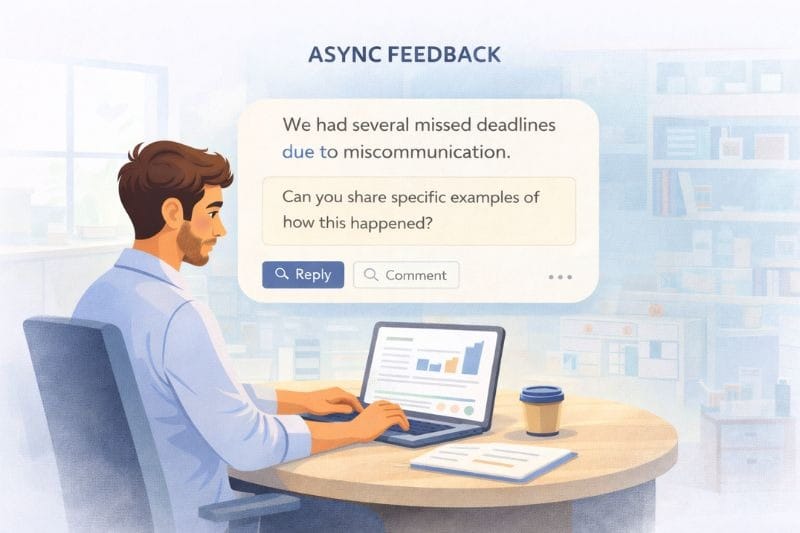
Post-mortems are meant to encourage feedback and fix mistakes, but in reality, they often encourage defensiveness, not reflection.
Both the benefits of asynchronous feedback - creating time and space to think- are needed to honestly get to the bottom of task or project failures. You need to receive feedback where the team member doesn’t feel they are being blamed, but rather asked for the reasons that caused the problem. Such cases are better handled with async feedback.
- Team members can review documentation and reflect on what happened.
- It separates emotion from analysis. Analysis is a higher-order level of thinking, and the brain's limbic system short-circuits this under stress.
- Specific examples can be given, which is a primary benefit of asynchronous feedback.
Why asynchronous feedback is ideal for remote teams
Remote teams face communication challenges that make their communication unique. There are timezone differences, zoom meeting fatigue, and reduced social cues. Quick messages lacking substance seem to be the order of the day.
Asynchronous communication is therefore ideal for remote teams because it respects distributed teams. Everyone doesn’t have to be available at the same time for specific feedback requests. If the feedback is integrated into your communication platform, it reduces context switching, and these factors increase the likelihood of better quality feedback. For HRs and business leaders building remote-first work cultures, async feedback should be a foundational communication strategy.
Slack-first tools like Stany Standup make this transition smooth. Feedback prompts appear where your team is already working, encouraging engagement. With automated reminders that respect time zones and customized questions, you can help your team give better feedback.
Conclusion
Asynchronous feedback is a method of receiving feedback that aligns with how people think and behave in real-life situations. The behavioral sciences have long put forward the idea that valuable and insightful feedback cannot happen when people are put under pressure. A communication system based on immediate feedback alone is destined to be full of bias, thinking errors, and prioritize social and psychological safety over honesty.
If you're frustrated with the shallow feedback that makes up most of your interactions with your team, it’s time to do something differently. Introduce async communication alongside traditional methods and watch it transform feedback requests. Start here with Stany Standup and Pulsy Survey.
FAQs: Asynchronous feedback
1. What is an example of asynchronous feedback?
An example of asynchronous feedback is when a manager sends a request for specific task or project feedback in Slack or another communication platform. The manager asks for input within a 48-hour timeframe, giving team members the freedom to complete the request when it suits them. This eliminates the need for immediate feedback in a live meeting and encourages deeper thought.
2. What are the three types of feedback?
Three of the most common types of feedback in the workplace are: Positive feedback (reinforcing behaviors that work well), constructive feedback (identifying areas that need improvement), and developmental feedback (focusing on long-term development and growth).
3. Can customer feedback be asynchronous?
Yes, customer feedback can be asynchronous. Emails, surveys, online reviews, and feedback forms provide the customer with an opportunity to think about the experience they’ve had and give honest and detailed feedback. Phone calls or face-to-face requests for service review, often don’t produce the same results because the timing is off, or the customer feels pressured to say something positive.