8 HR analytics platforms that turn workforce data into real decisions
Most companies collect workforce data but rarely act on it. Compare 8 HR analytics platforms for 2026, from BuddiesHR to Visier, Workday, Culture Amp and Lattice, with what each does best, pricing and who it fits.

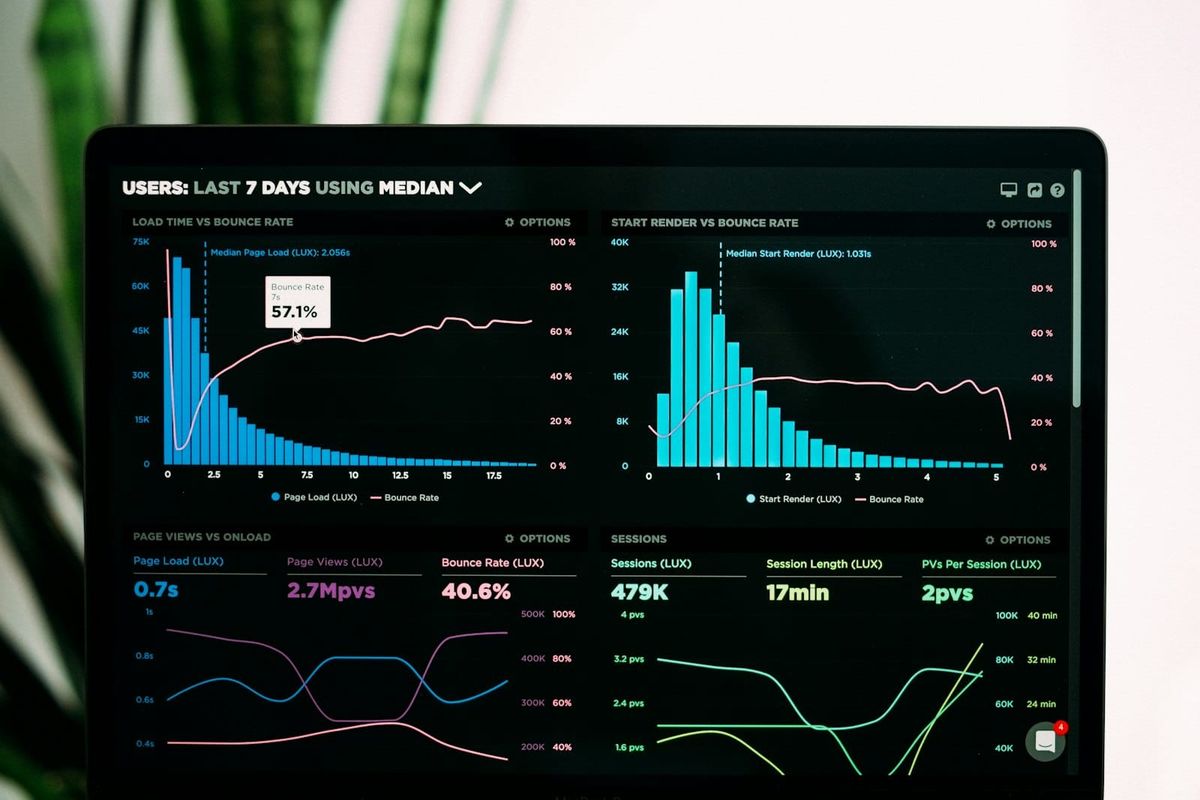
Most organizations are sitting on a goldmine of workforce data and doing almost nothing with it. Despite the growing number of tools available to collect, analyze, and turn workforce data into insights, 83% of companies worldwide surveyed by Deloitte report low workforce analytics maturity. That is a problem you can fix today, and the right HR analytics platform is where it starts.
The gap between companies that act on people data and those that guess is widening fast. Organizations with mature HR analytics programs are 5x more likely to make fast, data-driven decisions and 3.2x more likely to outperform competitors, according to McKinsey People Analytics research. If that gap sounds dramatic, consider what is at stake: replacing an employee costs one-half to two times their annual salary, and voluntary turnover costs US businesses $1 trillion a year. Better workforce data is not a nice-to-have; it is a direct line to the bottom line.
This guide breaks down eight platforms doing this well in 2026, what each one does best, who it is built for, and what it honestly falls short on. We start with the platform best suited to teams that want to get started without a six-month implementation.
Key takeaways
- HR analytics adoption is growing but maturity is still low: According to Deloitte, 71% of companies now cite people analytics as a high priority for their HR function, yet fewer than 20% believe they are using it effectively. If you are not yet running structured analytics, you are in the majority, but that majority is losing ground.
- Response rate is the hidden analytics problem: Most HR platforms report what employees think only when employees bother to log in. BuddiesHR's Pulsy survey data shows pulse surveys delivered natively inside Slack achieve over 90% response rates, compared to 30% for traditional portal-based tools, which means the data you base decisions on is actually representative.
- Predictive analytics pays back fast: A Mercer study found that organizations using predictive workforce analytics reduce unplanned attrition costs by an average of 23% within 18 months of implementation. If your platform only tells you what happened, start planning an upgrade.
- Self-service is the new standard: The trend in 2026 is toward self-service analytics, giving managers, HRBPs, and business leaders direct access to relevant insights without requiring data science expertise. McKinsey research shows that companies with democratized HR analytics report 35% higher manager satisfaction scores and 18% better team retention rates compared to those with centralized-only models.
- Platform complexity must match team size: Enterprise tools like Visier and Workday People Analytics carry steep learning curves and six-figure annual price tags. Teams under 500 employees should shortlist platforms built for fast onboarding and affordable per-seat pricing rather than raw analytical depth.
Quick-start prioritization framework
| Platform | Best for | Effort level | Time to value |
|---|---|---|---|
| BuddiesHR | Teams on Slack/Teams wanting engagement + performance data in one place | Low | Days |
| Visier | Data-mature enterprises needing cross-system predictive analytics | High | Weeks to months |
| Workday People Analytics | Organizations already on Workday HCM | Medium | Weeks |
| Culture Amp | Mid-market teams focused on engagement and DEI benchmarking | Low-Medium | Days to weeks |
| Lattice | Companies wanting performance-linked analytics with OKR tracking | Medium | Weeks |
| ChartHop | HR/finance teams running headcount planning and org design | Medium | Weeks |
| Crunchr | Enterprises with fragmented HR systems needing a unified analytics layer | High | Weeks |
| Deel HR | Distributed or global teams needing payroll-integrated workforce data | Medium | Weeks |
Start here based on your situation:
- Small to mid-size team (under 500 employees) on Slack or Teams: BuddiesHR, lowest friction, fastest setup, real engagement data from day one.
- Enterprise already using Workday: Workday People Analytics, native integration means no data migration headaches.
- HR team with fragmented data across Workday, SAP, and Oracle: Crunchr or Visier, both built to unify messy multi-system HR data.
- Hiring and managing across multiple countries: Deel HR, compliance and payroll analytics built for distributed teams.
- Performance and OKR analytics as the top priority: Lattice, strongest modular performance-to-data pipeline.
- Deep engagement and culture benchmarking: Culture Amp, the most established survey-science benchmark dataset in the market.
1. BuddiesHR, editor's pick, best for teams on Slack and Microsoft Teams
Best for: Companies using Slack or Microsoft Teams that want engagement, recognition, performance, and survey analytics to live where employees already work, without a separate portal nobody opens.
Portal-based HR tools consistently suffer from low engagement: on a typical portal-based survey tool, 78% of people quietly ignore the survey, leaving only 22% responding. That means the data HR teams use to make decisions about compensation, development, and retention is built on a one-in-five sample. BuddiesHR solves this by running the entire HR experience natively inside the communication tools teams already use daily.
What BuddiesHR does
Every BuddiesHR module comes with a real web platform including dashboards, analytics, segmentation, templates, org chart, review cycles, and exportable reports. Employees never leave Slack or Teams to respond, which is why BuddiesHR's pulse survey feature, Pulsy, achieves over 90% response rates compared to the industry average of around 30% for portal-based tools.
The platform covers four main pillars: engagement measurement (eNPS, pulse surveys, quick polls), recognition and kudos (Clappy), performance reviews with 360-degree feedback, and celebrations and culture apps. BuddiesHR delivers automated 360-degree feedback that provides powerful insights into how employees are performing. Recognition data from Clappy flows directly into performance review cycles, so feedback is grounded in what people actually delivered rather than recency bias.
BuddiesHR offers customizable analytics tools to generate insights on workforce trends, aiding strategic decisions. The web dashboard gives HR admins segmentation controls, survey result breakdowns by team or department, and exportable reports for executive conversations.
Pros:
- Natively embedded in Slack and Microsoft Teams, drives participation rates traditional portals never reach
- Covers engagement, recognition, performance reviews, and culture in one modular platform
- Fast setup: BuddiesHR's own documentation confirms the platform installs in 60 seconds
- Pricing starts from $1 per user per month, with a free tier for teams under 10 employees
- Rated 4.8/5 on G2 across 68+ verified reviews
Cons:
- BuddiesHR is a strong analytics solution but is not a full-suite HR system; it does not replace a dedicated HRIS for payroll or compliance-heavy workflows
- Advanced features like predictive analytics may require a learning curve for HR teams new to data science
- Pulsy survey functionality currently works with Slack only, with Microsoft Teams support in development
Pro tip: The highest-value move when starting with BuddiesHR is to run your first eNPS survey in week one, then use the segmentation dashboard to identify which departments are scoring below your company average. That single comparison tells you exactly where to focus manager coaching before the next performance cycle.
2. Visier, best for enterprise-grade predictive people analytics
Best for: Mid-market to enterprise organizations that need to unify workforce data from multiple HR systems and run predictive analytics on attrition, compensation equity, and headcount planning.
Visier leads people analytics as the platform that defined the category: a governed data model across HR systems, several hundred pre-built metrics and questions, predictive attrition, pay equity and diversity analytics, and a natural-language assistant.
What Visier does
Visier is a workforce intelligence platform that unifies HR, talent, and business data into a single analytics layer. Its flagship product, Visier People, ships with a library of pre-built metrics and analyses covering the employee lifecycle, headcount, turnover, compensation, diversity, internal mobility, and skills, so customers get working dashboards without building a data warehouse or BI layer from scratch.
The platform connects to virtually any HRIS, payroll, ATS, and engagement system to unify fragmented workforce data into a single analytics environment. Visier also includes Vee, its generative AI assistant, which allows HR teams and managers to ask natural-language questions about workforce data directly inside Slack or Teams.
Pros:
- Provides over 50 out-of-the-box metrics and reports that can be customized to meet an organization's specific needs, plus industry benchmarks to compare workforce metrics against peers
- Predictive attrition modeling, pay equity analysis, and DEI dashboards are best-in-class
- Natural-language query support via the Vee AI assistant reduces analyst bottlenecks
- Broad integration library covers Workday, SAP, Oracle, and most major ATSs
Cons:
- Independent reports place Visier above $50,000 per year for mid-market deployments and well above that for enterprise, pricing is strictly quote-based and not publicly available
- Implementation requires significant data preparation and IT involvement
- Learning curve is steeper than engagement-focused tools; adoption outside the analytics team can be slow
Pro tip: Before requesting a Visier demo, inventory how many HR systems you currently pull data from manually each month. If the answer is three or more, Visier's data unification layer alone pays for itself in analyst time saved.
3. Workday People Analytics, best for Workday HCM customers
Best for: Large enterprises already running Workday HCM that want AI-powered insights surfaced automatically within their existing environment.
Workday People Analytics is an AI-powered augmented analytics product that analyzes Workday Human Capital Management and talent data to surface prioritized people and workforce trends. It helps decision-makers understand risks, opportunities, key performance indicators, and contributing factors while reducing time spent on manual reporting.
What Workday People Analytics does
Workday People Analytics transforms fragmented workforce data into automated, natural-language narratives that HR and business leaders can act on immediately. By unifying HCM and financial data, the platform enables proactive attrition management, structured diversity measurement, and peer benchmarking.
A key feature is the "Suggested Business Questions" capability. This guides users toward workforce risks and opportunities they might not have thought to investigate, such as emerging skill gaps or early signals of leadership pipeline weakness.
Yet workforce planning remains predominantly focused on short-term headcount planning, with only 11 percent of organizations adopting a long-term perspective, according to McKinsey's HR Monitor 2026. Workday People Analytics directly addresses this gap by surfacing strategic skill and talent data alongside operational headcount metrics.
Pros:
- Native integration with Workday HCM means zero data migration and instant access to live HR data
- Includes machine learning pattern detection across compensation, attrition, and DEI datasets, plus Peakon employee listening integration linking sentiment signals to workforce metrics
- Automated storytelling delivers board-ready summaries without manual report-building
- Strong DEI and regulatory compliance reporting
Cons:
- Best value only when using the full Workday HCM ecosystem; complex implementation requiring Workday expertise; enterprise-level complexity may overwhelm smaller organizations
- Pricing is add-on to Workday HCM, teams not already on Workday face a very expensive buy-in
- Customization for non-standard reporting cases can feel constrained compared to standalone BI tools
4. Culture Amp, best for engagement and DEI benchmarking
Best for: Mid-market to enterprise HR teams that want best-in-class engagement survey science, driver analysis, and DEI benchmarking against a broad industry dataset.
Culture Amp calculates the correlation coefficient between each survey question and overall engagement, this driver analysis capability is what separates it from simpler survey tools and helps HR teams identify which interventions will actually move the needle on employee satisfaction.
What Culture Amp does
Culture Amp covers employee surveys, performance reviews, and goal management. Its survey module leads the market with over 200 templates and a benchmark database covering more than 1,100 industry segments, making it the most rigorous option for organizations where benchmarking against comparable companies is a strategic priority.
Culture Amp's analytics capabilities include deep driver analysis, heatmaps, and NLP comment analysis across survey data, giving HR teams a qualitative read on the open-ended feedback alongside the quantitative scores. According to SHRM, 57% of organizations report that people analytics has produced measurable profits or savings, and Culture Amp's driver analysis is designed to show exactly where those savings opportunities sit.
Pros:
- Largest engagement benchmarking dataset in the market, over 1,100 industry segments
- Driver analysis identifies the levers most correlated with overall engagement at your specific company
- Strong DEI dashboards with demographic breakdown by representation, pay equity, and engagement
- Integrates with common HRIS and communication platforms including Slack
Cons:
- Culture Amp publishes no pricing anywhere and requires a full sales process to get a number
- Performance management module is less mature than dedicated tools like Lattice or BuddiesHR
- Minimum contract size typically requires 100+ employees, making it less accessible for small teams
Pro tip: Use Culture Amp's driver analysis to identify your top three engagement drivers before your next leadership offsite. Present those three levers specifically, not an overall engagement score, and you will get far more actionable budget conversations.
5. Lattice, best for performance-linked analytics
Best for: Companies that want performance management, OKR tracking, and engagement data connected in a single analytics view, with modular pricing that lets teams start with one component.
Lattice is the stronger pick if your top need is performance management: review cycles, OKRs, and ongoing feedback, with engagement as a secondary feature.
What Lattice does
Lattice connects performance reviews, goal tracking, compensation management, and engagement surveys into a unified data model. The AI Agent feature, available to all customers, can analyze trends across performance and engagement data and surface coaching recommendations for managers.
Lattice contracts are billed annually with a $4,000 minimum; Engagement starts at $4, Goals and OKRs at $8, and Performance at $10 per seat per month. That modular structure means smaller teams can start with just the engagement or goals module and expand over time.
Pros:
- Strongest OKR and goal management system of any platform in this list, cascading OKRs with alignment maps
- Modular pricing with published per-seat numbers, no sales call required to build a budget
- AI Agent feature provides automated insight generation and manager coaching prompts
- Real-time performance dashboards with completion rate tracking across review cycles
Cons:
- Lattice narrowed its scope by exiting HRIS entirely, so headcount and payroll reporting require integration with an external HRIS
- Full-suite cost climbs fast: a complete stack with performance, goals, engagement, and compensation runs $18-22 per seat per month
- Survey benchmarking database is smaller than Culture Amp's dataset
6. ChartHop, best for headcount planning and org design
Best for: HR and finance teams that need to model headcount scenarios, track compensation, and present org structure analytics to the CFO in a single platform.
ChartHop's org chart, headcount planning, compensation management, and workforce analytics tools are best-in-class for teams where the primary analytics problem is understanding and planning organizational structure rather than deep behavioral or engagement science.
What ChartHop does
ChartHop Core includes people analytics, live org charts, employee profiles, and an AI assistant called Ask ChartHop. Core works as a standalone analytics product, with pricing billed annually per employee per month.
The platform excels at scenario modeling, HR and finance leaders can build headcount plan A, plan B, and plan C for a proposed reorg, compare the cost implications side-by-side, and present a final recommendation to the executive team without leaving the platform.
Pros:
- Best-in-class org visualization with live, automatically updating org charts
- Scenario modeling for reorgs and headcount planning is the strongest of any platform in this list
- Compensation management is modular and connects directly to headcount planning
- Strong integration story, connects to most HRIS, ATS, and finance systems
Cons:
- ChartHop shines when structure and headcount plans are the analytics problem but is weak for shift-level operational analytics or clinical workforce scheduling
- Performance reviews and feedback exist but are secondary to the headcount and org story
- Modular pricing adds up: base platform plus two or three additional modules can reach $12-18 per employee per month
7. Crunchr, best for enterprises with fragmented HR systems
Best for: Mid-market and enterprise organizations that need to unify data from multiple HR platforms (Workday, SAP, Oracle) into a single self-serve analytics environment with GDPR compliance built in.
Crunchr is best suited for mid-market and enterprise HR teams that need to deploy strategic workforce planning and customized HR dashboards without requiring deep data science expertise. It is the strongest choice for complex organizations dealing with fragmented HR systems across tools like Workday, SAP, or Oracle that need a unified, GDPR-compliant analytics overlay.
What Crunchr does
Crunchr's pitch is the classic people analytics play: connect Workday and other HR systems, get hundreds of pre-built metrics on turnover, span of control, and diversity, all wrapped in drag-and-drop dashboards called Crunchr Stories.
Crunchr People Analytics offers AI and machine learning, generative AI, predictive analytics, and real-time analytics for HR reporting. It includes dashboards, custom reports, data blending, data connectors, and data import/export, plus HR metrics, KPI monitoring, trend analysis, turnover tracking, and role-based access.
An AI-powered assistant, the Crunchr Assistant, helps HR and people leaders query data and surface insights without building reports manually.
Pros:
- Reviewers consistently praise Crunchr's intuitive drag-and-drop interface and ease of use for HR teams
- Fully GDPR-compliant with a designated Data Privacy Officer, critical for European enterprises
- Pre-built "Crunchr Stories" dashboards allow HRBPs to build their own views without IT support
- Strong predictive workforce planning including skills gap modeling and attrition forecasting
Cons:
- Cost is high for small businesses, pricing is enterprise-tier and quote-based with no published rates
- Advanced segmentation features sit behind higher enterprise pricing tiers; dashboard customization feels constrained when building highly specific HR views
- Initial setup demands significant IT involvement to connect and harmonize data sources before delivering value
Pro tip: Before an enterprise demo of Crunchr, map out every HR data source your team currently pulls from manually. Crunchr's value is proportional to the number of disparate systems it replaces, the more disconnected your current stack, the stronger the ROI case you can build.
8. Deel HR, best for distributed and global workforce analytics
Best for: Companies hiring and managing employees or contractors across multiple countries who need payroll compliance, workforce cost visibility, and HR analytics in a single global system.
As of 2026, Deel has evolved into an all-in-one HR platform for managing distributed workforces across 150+ countries, simplifying international hiring and compliance. Its analytics capabilities are built around the specific problems of global workforce management, headcount by country, compensation cost by currency, compliance status by jurisdiction.
What Deel HR does
Deel HR combines core HRIS functionality for storing and managing global employee data with tools for employee onboarding, document management, time monitoring, compensation insights, time off management, and employee analytics.
Deel includes reporting and analytics that help leaders understand headcount, costs, and worker distribution across countries. The platform's AI assistant can answer ad hoc workforce questions, headcount by region, compensation ranges by country, contractor versus employee split, without requiring custom report builds.
MIT Sloan's analytics research shows that data-driven HR decisions improve employee performance by 21%. For distributed teams where visibility across time zones and legal jurisdictions is the core challenge, Deel's centralized data layer directly enables that kind of evidence-based decision-making.
Pros:
- Covers 150+ countries with in-house compliance, the strongest global legal coverage of any platform in this list
- Payroll, compliance, and analytics in one system eliminates data reconciliation between separate tools
- HRIS platform pricing starts from $5 per month per employee, accessible for mid-market international teams
- Transparent headline pricing for most modules, unusual in the HR analytics category
Cons:
- Analytics depth is functional rather than advanced, Deel does not compete with Visier or Workday for predictive modeling
- Not the right tool if your team is primarily domestic and your analytics needs go beyond basic headcount and cost reporting
- For enterprise organizations, Deel is not a replacement for a comprehensive system like Workday or SAP SuccessFactors
Pro tip: If your company is growing internationally and you are still managing global payroll in spreadsheets, use Deel's cost visibility dashboard in the first 60 days to build a single cost-per-headcount view by country. That dashboard alone typically justifies the platform cost to the CFO.
How to choose the right HR analytics platform for your team
The honest answer is that most teams choose the wrong platform by prioritizing features over fit. Here are the three questions that actually matter before you sign a contract.
Question 1: Where does your team live?
If your company runs on Slack or Microsoft Teams and your engagement surveys currently get a 20% response rate, the platform problem is distribution, not analytics depth. A tool like BuddiesHR that runs natively inside those environments will generate more useful data than a sophisticated standalone platform nobody opens. 81% of HR leaders consider analytics essential for strategic planning, but that only matters when the data flowing into those analytics is actually representative of your workforce.
Question 2: How many HR systems are you currently reconciling manually?
The best HR analytics platforms pull together data from payroll, ATS, performance management, engagement tools, and core HR systems into a unified view. If you are pulling CSVs from three or more separate systems to build a monthly headcount report, a dedicated unification layer like Crunchr or Visier will pay for itself quickly. If you are on one HRIS already, an embedded solution like Workday People Analytics or a lightweight tool like BuddiesHR will get you to insights faster.
Question 3: What decision do you most need to make better?
Every platform in this list is strongest in a specific analytics domain. Culture Amp is the best tool for understanding which engagement drivers are costing you retention. Lattice is the best tool for connecting goal achievement to performance ratings. ChartHop is the best tool for modeling what a reorg costs before you commit. According to Manpower Group, 74% of employers report difficulty finding the skills they need, while McKinsey research shows that only 12% of HR leaders engage in strategic workforce planning with a time horizon of three years or more. If skills and long-term workforce planning are your priority, Visier or Crunchr offer the depth you need.

Common mistakes teams make with HR analytics platforms
Buying analytics depth before solving the response rate problem
The most common mistake is purchasing a sophisticated analytics platform and then feeding it low-quality data because employees are not filling out surveys. Only 45% of HR professionals believe their analytics systems improve talent and business decisions, down from 57% just two years ago, and poor data quality is a major contributor to that confidence gap. Fix your data collection layer first. That means getting your engagement surveys into the channels where employees already work.
Treating every statistic as a report rather than a decision trigger
Gartner estimates that by 2026 organizations with real-time workforce dashboards make people decisions 3x faster than those relying on periodic reporting cycles. The speed advantage comes from connecting a data point to a specific action. If your attrition risk score goes above a threshold in a specific department, what exactly happens next? Platforms are only valuable when each metric has a predefined owner and response protocol.
Skipping the manager adoption layer
OECD research shows that 28% of managers lack clarity around accountability for algorithm-driven decisions, and 27% struggle to understand how these tools generate recommendations. The best analytics platform in the world produces zero change if the managers who need to act on the data never open it. Choose platforms with manager-facing dashboards that surface relevant, role-specific insights rather than overwhelming people with organization-wide data.
Frequently asked questions
What is an HR analytics platform?
An HR analytics platform is software that collects, centralizes, and analyzes workforce data to help HR teams and business leaders make evidence-based decisions about hiring, retention, engagement, compensation, and organizational structure. The best platforms go beyond historical reporting to offer predictive modeling, forecasting which employees are at flight risk, which teams are heading toward burnout, or what a proposed reorg will cost before it is implemented.
How much do HR analytics platforms cost?
Pricing varies enormously by platform type and organization size. BuddiesHR starts from $1 per user per month, with a free tier for companies under 10 employees. Mid-market engagement platforms like Lattice start from $4 per seat per month, while enterprise platforms like Visier and Crunchr are strictly quote-based and independent reports place Visier above $50,000 per year for mid-market deployments. The right question is not which tool is cheapest but which tool delivers the specific insight that will pay back the investment fastest.
What is the difference between HR analytics and people analytics?
The terms are largely interchangeable in practice. HR analytics typically refers to data analysis within the HR function, measuring recruitment efficiency, turnover rates, training completion, and similar operational metrics. People analytics is often used to describe a broader, more strategic practice that connects workforce data to business outcomes like revenue per employee, team performance, or customer satisfaction. Most modern platforms marketed as either "HR analytics" or "people analytics" cover both levels.
Do small businesses need an HR analytics platform?
Yes, and the threshold is lower than most people expect. Even a 15-person team benefits from knowing which departments have declining engagement before those employees start looking elsewhere. The average cost per turnover event is $15,000-$25,000, which means a single preventable departure at a small company can cost more than a full year of platform fees. The key is choosing a lightweight tool built for small teams rather than attempting to implement an enterprise platform at startup scale.
How long does it take to implement an HR analytics platform?
Setup time ranges from 60 seconds to several months depending on the platform. BuddiesHR installs in 60 seconds inside Slack or Microsoft Teams with no data migration required. Mid-market platforms like Lattice or Culture Amp typically take one to four weeks including survey configuration and integration setup. Enterprise platforms like Visier or Crunchr require significant data engineering work and can take two to six months to reach full value.
What data privacy considerations apply to HR analytics?
HR analytics platforms handle sensitive personal data, which makes compliance with regional privacy laws, including GDPR in Europe and CCPA in California, critical. 84% of senior HR executives indicate that they need guidance and direction to ensure the privacy and fairness of new information sources and tools at their disposal. Before selecting a platform, verify that it offers role-based access controls, anonymized survey responses, and documented data processing agreements. For European organizations, Crunchr's GDPR-compliant architecture and designated Data Privacy Officer make it a strong shortlist candidate.
The bottom line
The workforce data gap is expensive. Teams that act on people analytics outperform those that guess, on retention, on engagement, on hiring quality. The good news is that the right starting point is simpler than most HR leaders expect.
If your team runs on Slack or Microsoft Teams and you want meaningful engagement and performance analytics running this week, BuddiesHR is the clearest path from zero to insight. Install in 60 seconds, run your first pulse survey, and use the segmentation dashboard to find the engagement story your monthly all-hands is missing.
For teams ready to go deeper, connecting multiple HR systems, running predictive attrition models, or building the data layer for enterprise workforce planning, the other seven platforms in this guide each own a specific problem worth solving.
The only wrong choice is staying in spreadsheets.
Sources
- 10 Workforce Analytics Trends Shaping HR in 2026, AIHR. Deloitte research on workforce analytics maturity and OECD data on algorithmic decision-making accountability. https://www.aihr.com/blog/workforce-analytics-trends/
- Top 100+ HR Analytics and Metrics Statistics 2025, Second Talent. McKinsey People Analytics data on HR program maturity and business outcomes. https://www.secondtalent.com/resources/hr-analytics-metrics-statistics/
- Transforming HR: Key Analytics Trends to Watch in 2026, People Pilot. Deloitte, Gartner, and McKinsey statistics on analytics adoption and ROI. https://www.peoplepilot.io/blog/transforming-hr-key-analytics-trends-to-watch-in-2025
- HR Monitor 2026: Top trends in the people function, McKinsey. Strategic workforce planning adoption data and employee retention drivers. https://www.mckinsey.com/capabilities/people-and-organization/our-insights/hr-monitor
- HR.com State of People Analytics 2025-26, HR.com. Survey data on analytics effectiveness and HR professional confidence. https://www.hr.com/en/resources/free_research_white_papers/hrcom%E2%80%99s-state-of-people-analytics-2025-26_mhyux1wn.html
- Employee Turnover Statistics 2026, Stealth Agents. Replacement cost data, voluntary turnover rates and industry benchmarks. https://stealthagents.com/research/employee-turnover-statistics-2026
- Employee Retention Statistics 2026, Second Talent. Gallup replacement cost benchmarks and quit rate data from BLS. https://www.secondtalent.com/resources/employee-retention-statistics/
- BuddiesHR Platform, BuddiesHR. Platform features, pricing, and response rate data. https://buddieshr.com
- BuddiesHR Reviews and Testimonials, BuddiesHR. Customer reviews and G2 ratings. https://buddieshr.com/reviews
- Visier Review 2026, ERP Research. Features, pricing model, and AI capabilities of Visier People.
- Best People Analytics Software: 8 Platforms Reviewed, WorkIntelHub. Visier pricing benchmarks and enterprise comparison data. https://workintelhub.com/tools/best-people-analytics-software
- Workday Augmented Analytics, Workday. Official product documentation for People Analytics features. https://www.workday.com/en-us/products/analytics-reporting/augmented-analytics.html
- Culture Amp vs Lattice: Full 2026 Comparison, ThriveSparrow. Pricing, feature comparison, and AI capabilities for both platforms. https://www.thrivesparrow.com/blog/culture-amp-vs-lattice
- Best HR Analytics Software (2026): 8 Tools Compared, Ordio. Feature and pricing breakdown including Culture Amp, Lattice, and ChartHop. https://www.ordio.com/en/insights/guides/hr-analytics-software
- Crunchr Review 2026, HR.software. Features, pricing, and enterprise fit assessment for Crunchr. https://www.hr.software/reviews/crunchr
- Deel Review 2026, Thrivea. Features, pricing, and analytics capabilities for distributed teams. https://thrivea.com/blog/deel-review-2026/
- Top HR Industry Statistics 2025, Second Talent. HR leader survey data on analytics adoption and business outcomes. https://www.secondtalent.com/resources/hr-industry-statistics/
- Predictive HR Analytics: Shaping Workforce Strategy in 2026, Lift HCM. SHRM, isolved, and Deloitte statistics on analytics ROI and skills shortages. https://lifthcm.com/article/predictive-hr-analytics-shaping-workforce-strategy