A guide to the performance improvement plan (PIP)
Need to implement a performance improvement plan (PIP)? Our guide discusses all the essential things you need to know, and gives you examples to follow.

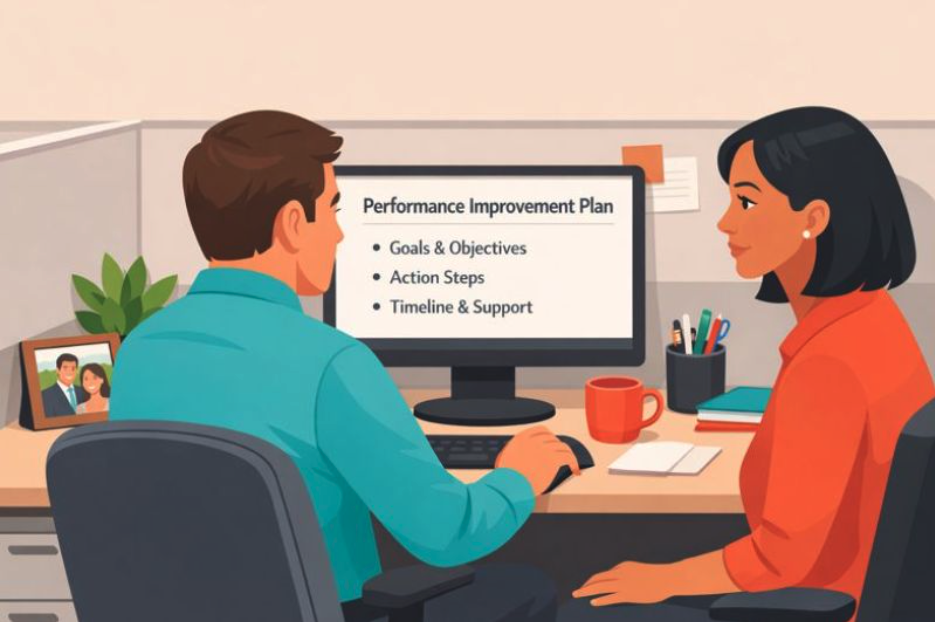
The performance improvement plan is often dreaded by both employers and employees because it signals difficult conversations and serious consequences. Despite this, there is a way to get through it successfully.
This guide brings clarity to the process and provides you with examples you can use immediately in your PIP discussion. Let’s get you started.
Quick Overview
A performance improvement plan is an HR document that specifically addresses poor performance by an individual. The focus of the plan is corrective action. The PIP documents performance expectations, identifies skills gaps, and actions that will lead to performance improvement. It is often seen as a last resort in correcting poor performance, and may lead to dismissal, but this is not always the case.
Table of Contents
- What is the purpose of a PIP?
- When is a PIP needed?
- How to handle a PIP discussion effectively
- Ready-to-use performance improvement plan examples
- Conclusion
- FAQs: Performance improvement plan (PIP)
What is the purpose of a PIP?
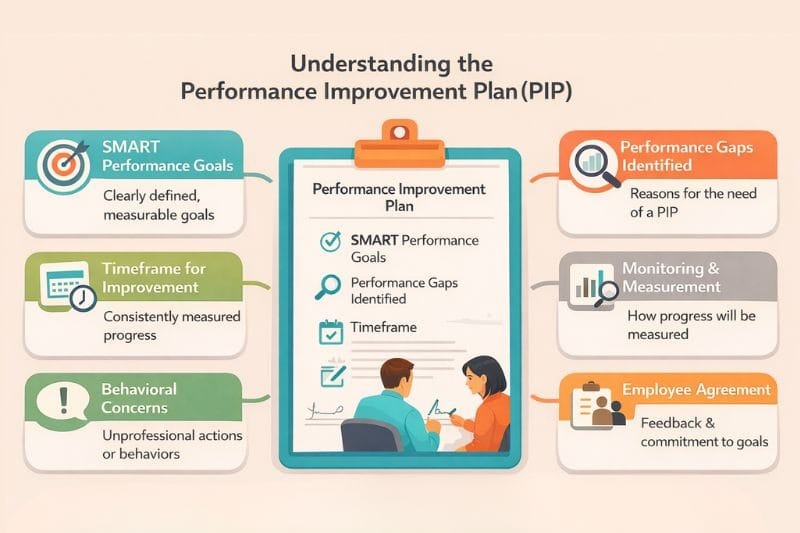
A performance improvement plan is an internal HR document. It is drawn up with the involvement of managers, employees, and sometimes Human Resources. The intention is to improve employee performance by addressing performance deficiencies and providing additional training. However, it is considered a formal document and can lead to dismissal if measurable objectives are not met.
Sometimes called a PIP process, the document contains the following elements:
- Clearly defined performance goals are sometimes referred to as SMART goals.
- Measurable performance gaps that are the reasons for the PIP.
- How consistent improvement will be measured over a specific timeframe.
- Subjective performance issues that may be leading to poor performance, such as unprofessional behavior.
- How a manager will measure the employee’s progress.
- Employee feedback regarding the reasons for poor performance, and agreement to measurable goals.
The aim of the process is to clearly communicate to the employee where they are falling short, how they can improve, and what the consequences are likely to be of continued poor performance. Employees are entitled to give feedback, and this should be documented in the formal plan.
When is a PIP needed?
One Gallup study showed that ‘employees are 3.6 times more likely to strongly agree that they are motivated to do outstanding work when their manager provides daily (vs. annual) feedback.’ The report also showed that meaningful feedback is fast, focused, and future-oriented.
With this in mind, a PIP discussion’s real success depends on what happens in the weeks and months leading up to the process. Poor performance rarely shows up overnight; it is cumulative and observable over time. Therefore, the PIP should never be implemented out of the blue, without prior discussion about the employee’s role and their progress. Courts set a high threshold for employers to justify termination due to performance, and expect to see progressive attempts to rectify the situation.
Expert Advice: Before initiating the PIP process, make sure it is the appropriate intervention. Successfully meeting performance objectives relies on clear, measurable goals. It also calls for a comprehensive performance review mechanism, such as the 360-degree feedback. These strategies help to give constructive feedback to the employee, and without them, a PIP process could be premature.
If you don’t have these strategies in place, performance review software can help you gather fairer and more consistent performance data. Small businesses will also find ‘Best performance review for small companies’ helpful as a starting point.
How to handle a PIP discussion successfully

Employees often have scepticism regarding a PIP, even when managers and HR professionals say that it is not leading to termination. Depending on how the employee’s performance has been handled leading up to the PIP, managers may be dealing with high levels of tension and defensiveness at this stage. This makes it critical for the PIP discussion to be handled correctly. This checklist will help you navigate through the important parts of the meeting.
- Gather concrete and measurable data that can explain how performance issues appeared over time.
- Prepare adequately beforehand, discussing possible issues with an experienced manager or HR.
- Document as much information as you can. Use your predefined template for a PIP if possible.
- Set a meeting with the employee, advising that you will be initiating a PIP because they are not meeting expectations. If possible, send the data you have collected for them to review.
- On the day, set clear expectations for the meeting and proceed in a structured approach, giving the employee plenty of opportunity to participate.
- Document all points of discussion, especially past documented performance issues, employee feedback, and specific goals that must be met.
- Agree a timeline for improvement, and how you will measure progress. Clearly state the consequences of goals not being met.
- Formally close the discussion by reiterating the points discussed and agreed upon. Provide the employee a final opportunity to ask questions.
- Send a copy of the PIP document (and attachments) to the employee.
- Set a date for the review meeting. This assures the employee that they have a set timeframe in which to make performance improvements.
If you’re not sure how to clearly define employee performance goals for the PIP, ’Employee performance goals: Examples you can use right now’ can help you prepare for your discussion.
Ready-to-use performance improvement plan examples
Example 1: Inconsistent work quality and output
Example 2: Poor communication with the manager and team members
Example 3: Unprofessional work behavior
Conclusion
A PIP represents an important crossroads in a working relationship. For the employer, it is a last resort to improve employee performance, and for the employee, it is a signal that their job may be in danger. By following a well-established PIP process, the chances of successfully changing the situation increase. However, the PIP requires the commitment of both parties to reach the objectives for which it is intended.
The best performance improvement plan is the one you never have to write!
Consistent feedback is the enemy of poor performance. Use 360 reviews and AI insights to short-circuit performance issues before they begin. See for yourself how easy and efficient it can be with Simpleperf.
FAQs: Performance improvement plan (PIP)
1. How serious is it to be put on a PIP?
Putting an employee on a performance improvement plan (PIP) is an indication that other corrective actions have not helped to improve performance. Therefore, the PIP formalises the process by documenting it. The aim is still correction, and the employee should be given a chance to participate in its formulation. A PIP does not have to lead to a termination, and can yield positive results if approached correctly.
2. Does a PIP lead to termination?
The PIP does not automatically lead to termination. If it leads to the desired improvement in performance on a consistent basis, then it will have met its objectives. However, if the PIP fails to improve performance, it can lead to dismissal. A well-meaning PIP is about saving a job, not termination, but it is often the stake in the ground for the employer, before taking final steps to demote or terminate.
3. Should I quit if I get a PIP?
You do not need to quit if you get a PIP. It may seem easier than going through the process, but you will not be able to claim certain benefits if you do resign, like severance or unemployment.. If the matter cannot be rectified and you feel that you are unable to meet the performance expectations of the job, then resignation is an option. However, it may be more favorable to go through the process of a PIP and have your side and/or objections documented.
References:
- https://faruqilaw.com/blog/1004/pip-and-its-place-in-discrimination-litigation/
- https://www.uschamber.com/co/run/human-resources/legal-steps-to-firing-an-employee
- https://themacklaw.com/performance-improvement-plans-pips-what-they-are-and-when-to-get-help/
- https://www.monkhouselaw.com/performance-improvement-plan/