7 pulse survey tools that capture how employees really feel
Compare 7 pulse survey tools for 2026, from Slack-native BuddiesHR to Culture Amp and Lattice, with pricing, pros, cons and who each one fits, so you can hear how employees really feel before it is too late.

Every HR leader knows the feeling: you run an annual engagement survey, wait two months for results, then discover that half your team considered quitting in October. The data arrived in December. The moment had passed.
Global employee engagement fell to 20% in 2025, its lowest level since 2020, and Gallup estimates the economic cost of low engagement at $10 trillion. That number should be alarming, but the real problem is not engagement itself. It is the lag between how employees feel and when leaders find out.
Pulse survey tools solve the lag problem. Pulse surveys use 1 to 5 questions sent weekly or monthly to track employee sentiment in real time, with 80-plus percent response rates and early warning on morale. More importantly, standard surveys achieve only 30 to 40% response rates, while pulse surveys reach 85%, more than double the effectiveness. That difference in coverage is the difference between a complete picture and an educated guess.
This guide covers seven of the best pulse survey tools available in 2026, with an honest breakdown of what each one does well, where it falls short, and who it actually fits.
Key takeaways
- Response rates define the ROI: The difference between 30% and 85% response rates often comes down to whether the survey meets people where they already work. Choose a tool that lives inside the platforms your team already uses daily.
- Engagement is falling, not rising: According to Gallup's State of the Global Workplace 2026 report, 20% of employees worldwide were engaged in 2025, while manager engagement was just 22% globally, down from 27% in 2024. Give managers simple reports they can act on, not raw data they have to interpret.
- Frequency beats depth: Unlike traditional annual surveys pulse surveys provide real-time data, with a typical response rate of 70 to 85% versus 40 to 60% for annual surveys, and time to insight measured in days rather than months.
- Switching from quarterly to continuous listening works: Organizations that switched from quarterly check-ins to continuous micro-surveys saw their average engagement score jump from an industry-wide 70% to 86%, a 16-point surge. If your score has plateaued, survey cadence may be the lever worth pulling.
- eNPS is your baseline metric: The employee Net Promoter Score gives you a single, comparable number across time and departments. Any tool you pick should track it automatically and show the trend, not just the most recent reading.
Quick-start prioritization framework
| Tool | Best for | Effort level | Time to first insight |
|---|---|---|---|
| BuddiesHR (Pulsy) | Slack and Teams teams wanting >90% response rates | Low | Hours |
| Workleap Officevibe | Manager-led weekly pulse with driver model | Low | 1 to 2 weeks |
| Culture Amp | Benchmarking-driven HR teams with 500+ employees | Medium | Weeks |
| Lattice | Teams connecting pulse to performance management | Medium | Weeks |
| 15Five | Weekly manager check-ins plus OKR tracking | Low | 1 to 2 weeks |
| TINYpulse | Small teams running their first pulse program | Very low | Days |
| Leapsome | Mid-market teams linking surveys to learning and development | Medium | Weeks |
Start here based on your situation:
- Small team with no HR analyst (under 100 people): BuddiesHR or TINYpulse. Minimal setup, no dedicated survey expertise required, and you will have data in days.
- Mid-market team with Slack or Teams already deployed: BuddiesHR. The survey lives where your team already works, which is the single biggest driver of response rate.
- Team wanting performance plus pulse in one platform: Lattice or 15Five. Both publish transparent per-seat pricing and connect survey data to review cycles.
- Enterprise team needing industry benchmarks: Culture Amp. Its dataset of over 1 billion survey responses gives your engagement numbers external context that other tools cannot match.
1. BuddiesHR (Pulsy), best overall and best pulse survey in Slack
Editor's pick | Best for teams using Slack or Microsoft Teams
BuddiesHR is a people platform built to live inside Slack and Microsoft Teams rather than alongside them. Its pulse survey app, Pulsy, is the product most teams use first, and the reason most teams stay.
What makes it stand out
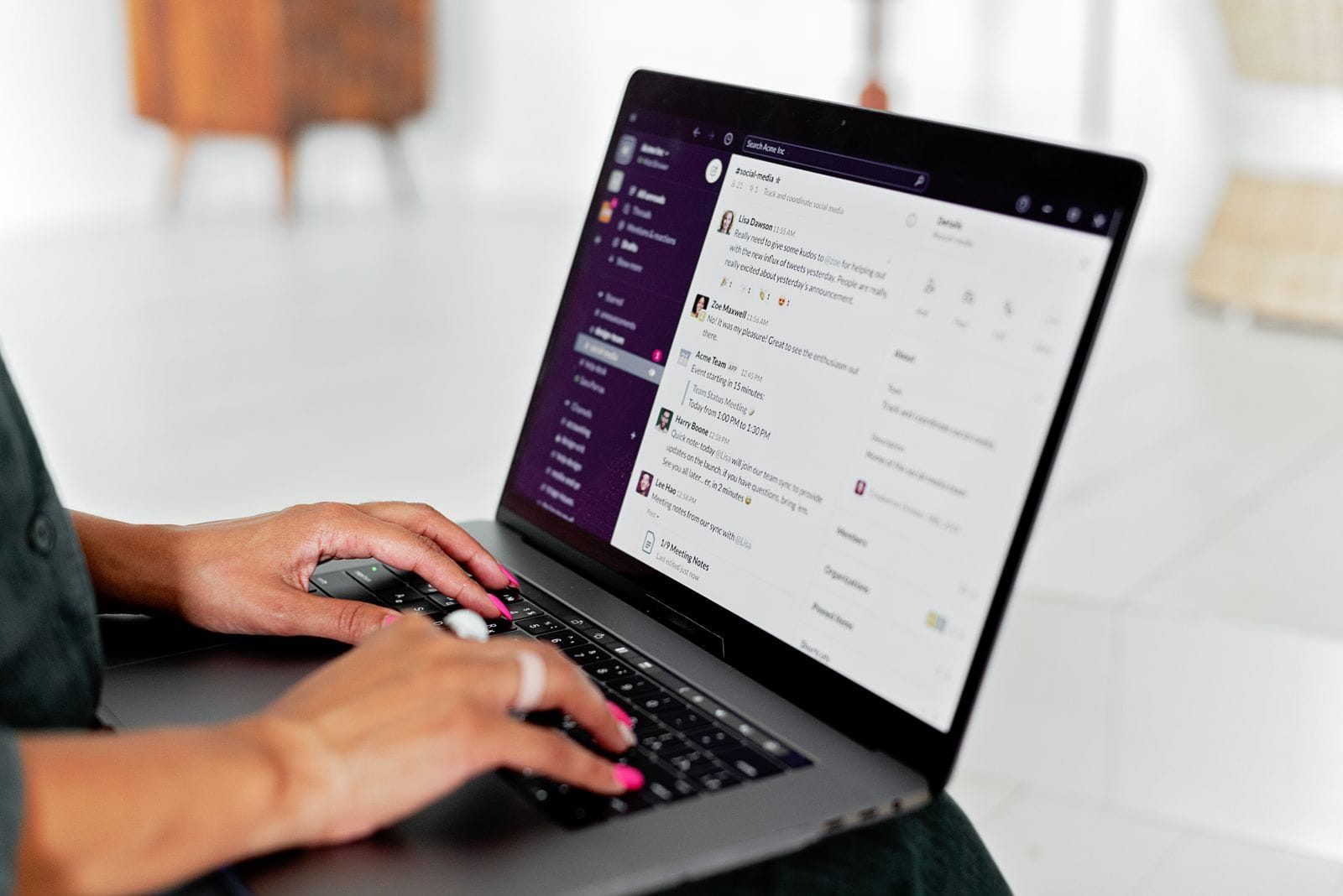
The core premise is simple: Pulsy surveys arrive as a Slack or Teams message, and people answer in one tap. There is no separate login, no link to click, and no browser tab to open. That frictionless experience is why BuddiesHR reports over 90% response rates with pulse surveys, compared to 30% for traditional engagement surveys, thanks to smart notifications and a fluid user experience.
Pulsy is the survey and eNPS app from BuddiesHR, running pulse surveys, engagement surveys, and quick polls right inside Slack or Microsoft Teams. Admins build surveys through a 3-step wizard covering name, anonymity, audience, and questions, then launch directly into Slack.
Recurring pulse surveys can be sent automatically every day, week, month, or quarter, with the ability to compare editions over time. When someone has not responded, Pulsy sends smart reminders automatically, but people who already submitted never get a reminder. That means no survey fatigue from repeat nudges to people who already answered.
For teams that need to understand sentiment by department, Pulsy supports filtering results by department and exporting to CSV or Excel. The eNPS survey is built in, and pulse surveys, eNPS, and performance signals can all be measured in one place.
BuddiesHR is rated 4.8 out of 5 on G2 across its apps and runs in more than 1,000 HR teams.
Pro tip: Run your eNPS survey on a quarterly cadence and your pulse on a weekly cadence. That combination gives you a stable long-term trend plus fast-moving morale signals, two different things that require two different question types.
Pros:
- Survey arrives as a Slack or Teams message, no external app required
- Over 90% response rate reported versus the 30% industry average for traditional tools
- eNPS, pulse, and engagement surveys all in one platform
- Smart reminders that only target non-respondents
- Results filterable by department with CSV export
- 4.8 out of 5 rating on G2
Cons:
- Requires Slack or Microsoft Teams (not standalone web-only)
- Advanced analytics are in the web dashboard, not inside Slack
Pricing: Free plan available. Paid plans start from a low monthly rate per workspace. Check BuddiesHR's pricing page for current rates.
Best for: Any team where Slack or Microsoft Teams is the daily work hub and response rate is the top priority.
2. Workleap Officevibe, best for manager-led weekly pulse cadence
Officevibe, now sold under the Workleap brand, is one of the original pulse survey tools and still one of the most opinionated. It is built around a manager-first philosophy: weekly questions go out automatically, and managers get a dashboard that flags team sentiment in near real time.
What makes it stand out
Workleap Officevibe has the deepest built-in pulse model of any tool in this category, with 122 questions across 10 engagement drivers. Automated pulse surveys go out weekly with 5 questions, and response rates stay high because it is quick.
Workleap Officevibe supports recurring surveys, custom surveys, team health reporting, manager-focused feedback workflows, and anonymous feedback with manager follow-up. The eNPS is built in, asked every 90 days inside the pulse, and cannot be edited or removed.
The Slack integration delivers survey nudges directly into the workspace and keeps surveys completable without leaving Slack. This is a meaningful friction reducer, though it is worth noting that Officevibe's Slack integration functions more as a delivery channel than the deeply native experience that purpose-built Slack tools provide.
Pro tip: Officevibe's 10-driver model is most valuable when you review it with managers in a monthly 1:1 rather than waiting for an action plan to emerge from the HR team. Treat the driver scores as conversation starters, not conclusions.
Pros:
- 122 questions across 10 scientifically validated engagement drivers
- Automated weekly pulse with consistent cadence
- Anonymous two-way feedback channel between employees and managers
- eNPS built in and tracked automatically every 90 days
- Slack and Teams delivery integration
Cons:
- Pricing has moved to a platform model; Workleap's Standard plan starts at $4,999 a year plus $32 per manager per month, billed annually.
- Workleap charges a flat yearly fee plus a fee for every manager, so a small team pays the same platform fee as a much larger one.
- Survey customization is limited on lower tiers
Pricing: Standard at $4,999 and Pro at $11,999, billed annually, each plus $32 per manager per month, with custom enterprise pricing above 250 employees.
Best for: Mid-sized organizations (50 to 250 employees) that want a proven, manager-centered pulse cadence and can justify the flat annual platform fee.
3. Culture Amp, best for enterprise benchmarking
Culture Amp is the tool for people teams that want to compare their engagement numbers against external data, not just against their own history. Culture Amp has a dataset covering 1.61 billion survey questions answered across thousands of organizations globally, with pulse templates developed by organizational psychologists.
What makes it stand out
Culture Amp offers engagement and pulse surveys with 40-plus ready-to-use templates, onboarding, offboarding, and DEI surveys, benchmarks drawn from over 1 billion survey responses, and AI comment summaries with an AI Coach for building action plans.
Pulse surveys provide shorter more frequent check-ins between full survey cycles. Nudges and reminders keep action plans active, and follow-up pulse surveys measure whether the actions taken produced improvement. This feedback loop is what differentiates Culture Amp from survey tools that stop at reporting.
The AI features in 2026 include AI-generated survey action recommendations that connect engagement driver scores to specific managerial and organizational interventions with evidence of effectiveness drawn from Culture Amp's aggregate dataset.
Pros:
- Benchmarks drawn from over 1 billion survey responses globally
- Survey templates designed by I/O psychologists
- AI-generated action plans connected to driver scores
- Engage and Perform modules can be bought separately
- Slack, Teams, SSO, and HRIS integrations included in every plan
Cons:
- Pricing starts at approximately $4,500 per year minimum, which makes it inaccessible for small teams wanting to trial the platform without a sales conversation.
- The pricing model can be expensive if the organization relies only on basic pulse surveys and does not actively use the deep analytics.
- Minimum 500 employees recommended for the benchmarking data to be statistically meaningful
Pricing: All pricing is quote-based; buyer reports place SMB entry around $5 to $9 per employee per month.
Best for: HR teams at 500-plus employee organizations that need industry-benchmark context for their engagement data and can support a dedicated people analytics function.
4. Lattice, best for connecting pulse to performance management
Lattice is built for people teams that want their engagement data to sit alongside performance reviews and OKRs rather than in a separate system. Lattice connects engagement surveys to performance management and career development, so sentiment data ties back to business outcomes. The platform suits teams that want survey insights linked to how people perform and grow.
What makes it stand out
The Engagement add-on covers full engagement surveys, automated pulse surveys, eNPS, onboarding surveys, and exit surveys. Results segment by team, department, and demographic, and managers see pulse data alongside their team's goal progress and review history.
Lattice's engagement surveys measure key drivers of employee satisfaction and commitment, with the platform including pulse surveys, eNPS tracking, and custom survey builders.
Pro tip: Lattice's real value is the connection between a low engagement score and an open performance conversation. If a team scores low on "clarity of expectations" in the pulse, the manager already has that data surfaced in the same tool where they run 1:1s. That is a workflow other pure-play survey tools cannot replicate.
Pros:
- Pulse and performance data in one platform, reducing tool sprawl
- eNPS, pulse, onboarding, and exit surveys included in the Engagement module
- Transparent, public per-seat pricing
- Integrates with Workday, BambooHR, ADP, Rippling, and 13 other HRIS tools
- AI-assisted engagement trend analysis
Cons:
- A common complaint about Lattice is that the $11 base price is misleading. Engagement surveys, career development, and compensation are core to most modern HR strategies, and each is a paid add-on.
- A $4,000 minimum annual spend applies regardless of team size.
- Survey science depth is lighter than Culture Amp's research-backed model
Pricing: Pricing is public and per seat billed annually: Performance is $10 per seat per month, Goals and OKRs $8, and Engagement $4, with a $4,000 minimum annual commitment.
Best for: Mid-market companies (100 to 1,500 employees) that already run structured performance reviews and want pulse survey data to live in the same system.
5. 15Five, best for weekly check-ins tied to OKR tracking
15Five is a performance management platform where the weekly check-in does double duty as a pulse survey mechanism. It is designed for companies that want to replace annual review cycles with high-frequency, lightweight conversations between managers and employees.
What makes it stand out
15Five lets you schedule eNPS and pulse surveys across departments or teams. Results can be viewed in heat maps filtered by manager, tenure, or location, with AI identifying engagement drivers and ranking which actions will have the most impact.
The core feature is a 15-minute structured check-in capturing sentiment, goal progress, and blockers in a single submission. For distributed teams where managers and reports rarely share a room, that recurring written check-in does double duty as a listening mechanism and as the manager relationship itself.
Pros:
- Transparent, public pricing starting at $4 per user per month for the Engage tier
- Weekly check-in format builds a habit rather than a periodic survey event
- OKR and goal tracking connected to engagement data
- Heat maps filterable by manager, tenure, and location
- eNPS built in with automatic calculation
Cons:
- The check-in format can feel prescriptive for teams that want flexible, fully anonymous pulse surveys with custom question sets.
- 15Five bills annually with no monthly option, and several features sit behind higher tiers.
- Survey depth is lighter than dedicated engagement platforms like Culture Amp
Pricing: 15Five costs $4 to $16 per user per month in 2026, billed annually. Engage starts at $4, Perform sits mid-range, and Total Platform reaches $16.
Best for: Teams of 50 or more employees where managers want a consistent weekly rhythm and the survey should connect directly to goals and OKR tracking.
6. TINYpulse, best for small teams starting their first pulse program
TINYpulse is where the pulse survey category started. TINYpulse, now part of WebMD Health Services, pioneered the lightweight weekly pulse. Its philosophy has not changed: one question per week, anonymous by default, low friction for everyone involved.
What makes it stand out
TINYpulse delivers a single question per week to reduce survey fatigue while maintaining a continuous sentiment signal. An anonymous suggestion box runs continuously alongside pulse data, not just after survey close. That is a meaningful differentiator, employees can surface concerns any time, not just when a survey is active.
The single-question weekly format is low enough friction that employees will fill it in, and low enough commitment that HR can manage it without dedicated tooling. It includes an anonymous suggestion box, peer-to-peer recognition, and low implementation effort with no dedicated HR analyst needed.
Pro tip: TINYpulse's single-question format is its greatest strength and its main limitation. Use it to build a pulse habit first. Once your team responds consistently, consider a tool with richer analytics to go deeper on what the sentiment data is actually telling you.
Pros:
- Minimum viable setup, one question per week, no survey design expertise needed
- Always-on anonymous suggestion box alongside pulse data
- Peer recognition (Cheers) built into the same product
- Lowest learning curve of any tool in this list
- The single weekly question and continuous suggestion box keep participation sustainable.
Cons:
- Limited survey customization and advanced analytics compared to enterprise tools.
- Acquired by WebMD Health Services, which has shifted its positioning toward broader well-being offerings
- No published self-serve pricing, requires a sales conversation
Pricing: Custom pricing. TINYpulse pricing starts around $5 per user per month.
Best for: Small to mid-sized teams (under 100 people) that have never run a pulse program before and want to start with the simplest possible format.
7. Leapsome, best for linking pulse surveys to learning and development
Leapsome is a people enablement platform that treats pulse surveys as one input into a connected system spanning reviews, goals, learning, and compensation. Leapsome runs engagement and pulse surveys, then links the results to performance reviews, goals, and development plans so feedback leads to follow-up.
What makes it stand out
Leapsome offers anonymous-by-default surveys with benchmarking, AI response summaries and themes, and AI-generated action plans. When a team scores low on "clarity around team goals," that result surfaces in manager one-on-ones, links to OKR visibility, and triggers a coaching prompt, all inside the same system.
Leapsome allows admins to configure survey cadence, anonymity thresholds, and custom questions to match team size, maturity, and change cycles. Surveys follow proven employee engagement best practices without forcing one-size-fits-all templates.
Pros:
- Pulse connected to performance reviews, goals, and learning paths
- AI-generated action plans based on survey driver scores
- Configurable anonymity thresholds
- HRIS integrations and multilingual support for global teams
- 14-day free trial available
Cons:
- Teams that want a standalone pulse tool without the performance and learning overlay will pay for features outside their use case.
- Pricing is quote-based with no public per-seat rate
- Minimum one-year contract term
Pricing: Strongest documented fit is 50 to 2,000 employees with a minimum one-year contract term. Leapsome offers a confirmed 14-day free trial with no credit card required.
Best for: Mid-market organizations (50 to 2,000 employees) that want pulse data to feed directly into learning and development workflows rather than sitting in a separate dashboard.

Common mistakes that kill pulse survey programs
Even the best pulse survey tool will fail if the program design is off. In my experience, most pulse programs stall for one of three predictable reasons, and each one is preventable.
Asking too much, too often
If your "pulse" survey has 25 questions, it is an annual survey disguised as a pulse. Keep recurring surveys to five questions or fewer. If you need more data, run a separate, clearly labeled deep-dive survey once per quarter.
Collecting data without acting on it
Organizations that collect pulse data and do nothing with it report response rates falling by 30 to 50% in subsequent surveys. That is the fastest way to destroy trust in the entire program. Closing the loop does not require a town hall, a brief Slack message from a manager saying "we heard you on workload and here is what we are changing" is enough to maintain confidence.
Ignoring the manager layer
Gallup's State of the Global Workplace 2026 report found that manager engagement fell from 27% to 22% in 2025, so give managers simple team reports and a clear action template rather than raw data. A manager who receives a 40-page data export will not act on it. A manager who receives a one-page summary with three recommended actions very likely will.
Pro tip: Set a "minimum response threshold" policy before you launch. Decide in advance that you will only share team-level results when at least 5 people respond. This protects anonymity, prevents gaming, and stops managers from trying to identify individual respondents in small teams.
How to choose the right pulse survey tool for your team
There is no universal best pulse survey tool. The right choice depends on three variables that only you know: where your team already works, what you plan to do with the data, and how much HR capacity you have to manage the program.
Match the tool to where your team already works
If your team is always in a Slack or Teams channel, send the pulse there. Email surveys typically achieve 15 to 25% response rates. Tools that live natively inside Slack, like BuddiesHR's Pulsy, consistently hit 90-plus percent because the survey is answered without leaving the app employees have open all day.
I have found that response rate is the metric HR leaders underweight when evaluating tools. A 90% response rate gives you a representative picture of your workforce. A 30% response rate gives you data from the third of your team who felt motivated enough to click a link, which is a systematically biased sample.
Decide whether you need pulse-only or pulse-plus-performance
If you want pulse data to connect to 1:1s, OKRs, and review cycles, Lattice and 15Five are built for that. If your priority is the survey itself, its science, its benchmarks, and its action planning, Culture Amp or Leapsome are stronger options. If you just need high response rates with minimal setup, BuddiesHR or TINYpulse will get you there fastest.
Be realistic about your analytics capacity
For companies with 100 to 300 employees, the priority is adoption rate and time to value. You likely do not have a dedicated HR team to run survey campaigns. Choosing Culture Amp's enterprise analytics suite for a 50-person team is like buying a commercial kitchen to make breakfast at home. The tool needs to match the team running it.
Pro tip: Before purchasing any pulse survey tool, run a free trial and ask one specific question: how long does it take from "install" to "first response received"? For the best tools, that number should be measured in hours, not days.

Frequently asked questions
What is a pulse survey and how is it different from an annual engagement survey?
A pulse survey is a short, regular employee survey with 5 to 15 questions sent out every two to four weeks. Unlike traditional annual surveys, pulse surveys provide real-time data on engagement, well-being, and work environment. The key difference is speed: pulse surveys give you data in days rather than months, and the shorter format means employees actually complete them.
What response rate should I expect from a pulse survey?
Pulse surveys outperform annual surveys in participation and responsiveness, with engagement rates often reaching 75 to 90%. The specific rate depends heavily on the delivery channel. Tools that deliver surveys inside Slack or Teams, where employees already spend their day, consistently report higher completion than email-based tools. Smart reminders that nudge only the people who have not answered are a key driver of high completion rates.
What is an eNPS survey and why does it matter?
The employee Net Promoter Score (eNPS) asks employees one question: "On a scale of 0 to 10, how likely are you to recommend this company as a place to work?" Scores from 9 to 10 are promoters, 7 to 8 are passives, and 0 to 6 are detractors. Your eNPS is calculated by subtracting the percentage of detractors from the percentage of promoters. Gallup estimates voluntary turnover costs US businesses about $1 trillion every year, and eNPS tracked over time is one of the earliest signals that voluntary attrition is about to rise. If your eNPS drops three or more points between quarters, treat it as a retention alert.
How often should I run pulse surveys to avoid survey fatigue?
Pulse surveys are typically sent every two to four weeks, with response times under five minutes. Weekly surveys work well when they are limited to three questions or fewer. Monthly surveys with five to ten questions give you richer data with less frequency. The rule of thumb I have seen work in practice: shorter surveys can go out more often, longer surveys need more time between rounds. Never ask for the same information twice in a short window.
Can a small team (under 50 people) use a pulse survey tool effectively?
Yes, and small teams often see the fastest payoff. TINYpulse is the right choice for small teams that want a fast, low-overhead pulse program with an anonymous feedback channel. BuddiesHR also works well at small scale because setup takes under 30 minutes and results appear inside Slack immediately. The one caveat for very small teams is anonymity: most tools require a minimum of three to five respondents before showing results, to prevent individual responses from being identified.
Is there a free pulse survey tool available?
BuddiesHR offers a free plan covering core pulse survey and eNPS functionality. Workleap Officevibe has historically offered a free tier with basic features. Leapsome offers a confirmed 14-day free trial with no credit card required. For teams not ready to commit to a paid platform, starting with BuddiesHR's free plan is a practical way to establish a pulse cadence, build the habit of acting on results, and then upgrade when the program has proven its value.
Make your next survey one people actually answer
The employee engagement crisis is not going to solve itself. As of August 2026, 53% of US employees were watching for or seeking a new job according to Gallup, which makes frequent listening a retention tool, not an optional HR exercise.
The good news is that the solution is straightforward. Run shorter surveys. Run them more often. Run them inside the platforms where your team already works. And act on what you hear.
BuddiesHR's Pulsy is the place to start if your team uses Slack or Microsoft Teams. The setup takes minutes, the response rates exceed 90%, and the eNPS tracking gives you a measurable baseline from day one. Start there, build the habit, and your pulse program will pay for itself the first time it surfaces a problem before it becomes a crisis.
Visit BuddiesHR to try Pulsy free
Sources
- Gallup State of the Global Workplace 2026, Gallup. Global and US employee engagement rates, manager engagement trends, and voluntary turnover cost estimates. https://www.gallup.com/workplace/349484/state-of-the-global-workplace.aspx
- BuddiesHR Pulsy Survey Product Page, BuddiesHR. Pulse survey and eNPS features, response rate claims, Slack and Teams integration details. https://buddieshr.com/employee-survey
- 13 Best Pulse Survey Tools and Software (2026), CultureMonkey. Tool comparisons, pricing, standout features, and use-case fit guidance. https://www.culturemonkey.io/employee-engagement/pulse-survey-tools/
- Employee Engagement Pulse Surveys: The 2026 Guide, TurnOnWork. Engagement statistics, response rate benchmarks, and cadence guidance. https://www.turnonwork.com/employee-engagement-pulse-surveys/
- Employee Engagement Statistics 2026: Global Data, Zoe Talent Solutions. Regional and manager engagement breakdowns from Gallup's 2026 report. https://zoetalentsolutions.com/employee-engagement-statistics/
- Employee Pulse Survey: A Smarter Way to Retain Talent, Xoxoday Empuls. Gallup retention data and manager engagement insights. https://www.xoxoday.com/blogs/empuls/employee-pulse-survey
- Pulse Surveys: A Faster Way to Track Employee Sentiment, Typeform. Response rate comparisons between pulse and traditional surveys. https://www.typeform.com/blog/pulse-surveys-a-faster-way-to-track-employee-sentiment
- Why Pulse Surveys Work, TheySaid. 85% versus 30-40% response rate research. https://www.theysaid.io/blog/guide-to-pulse-surveys
- The Complete Guide to Pulse Surveys 2026, Winningtemp. Pulse versus annual survey feature comparison and mobile response rate data. https://www.winningtemp.com/the-big-guide-to-pulse-surveys
- Officevibe Pricing 2026, Fridaypulse. Workleap Standard and Pro plan pricing verification for November 2026. https://fridaypulse.com/articles/officevibe-alternatives
- Culture Amp Pricing 2026: Quote-Only, Cost by Team Size, FeedbackPulse. Culture Amp minimum spend, annual cost estimates, and pricing structure. https://feedbackpulse.com/resources/culture-amp-pricing
- Lattice Pricing 2026: Published Plans and Annual Costs, FeedbackPulse. Lattice per-seat pricing, $4,000 minimum, and module breakdown. https://feedbackpulse.com/resources/lattice-pricing
- 15Five Reviews 2026: Pricing, Features, SelectHub. 15Five Engage tier pricing, eNPS features, and heat map capabilities. 15Five is a performance management platform that includes modules for performance reviews, engagement surveys, manager enablement, feedback, goals and alignment, competencies, compensation signals, and AI-powered insights.
- Best Employee Pulse Survey Software in 2026: 7 Tools Compared, 6Q. 15Five Engage pricing, Officevibe features, and tool comparison notes. https://6q.io/blog/best-employee-pulse-survey-software/
- BuddiesHR Pulsy Documentation, BuddiesHR. Survey creation wizard, recurring surveys, smart reminders, and department filtering features. https://buddieshr.com/docs/pulsy
- 15 Best Employee Pulse Survey Tools for HR Teams (2026), Vantage Circle. Tool comparisons, Leapsome and TINYpulse features, and pricing summaries. https://www.vantagecircle.com/en/blog/top-employee-pulse-survey-tools/
- How Real-Time Engagement Surveys Push Scores to 86%, HRBase. Micro-survey frequency and engagement score impact data. https://hrbase.site/employee-engagement-broken-fix-2026/
- What Are Pulse Surveys? Benefits, Tools, and Best Practices, HRStacks. Response rate targets, KPIs, and implementation guidance.